Croton-on-Hudson, NY · Tuesday, October 20, 2026· Oct 20, 2026Independent, AI-assisted local reporting from public recordsSource-linked·Corrections welcomed
Croton Outlines Harmon Grant Application as Residents Seek More Say in Project List
Croton is preparing another application for a $4.5 million NY Forward award, with potential projects around South Riverside Avenue and the train station. At the September 3 town hall, residents questioned the housing proposals and asked for a broader role in shaping the application.
●Presented a potential project list covering station parking, streetscapes, bike connections, private development and small-business improvements.
●Explained that the grant application and individual land-use approvals are separate processes.
●Heard requests for stronger community participation, safer walking routes, station improvements and places for families to gather.
●Said more outreach would follow; the state had not yet released the application timetable as of the meeting.
Croton officials outlined a possible $4.5 million NY Forward application centered on Harmon at a September 3 town hall, while residents pressed for a stronger role in choosing projects and questioned the inclusion of housing development at 425 South Riverside Avenue.
The presentation described an application still being developed, rather than an award Croton had received or a final list of funded projects. Village Manager Bryan Healy said the village had applied in 2024 and had spent the intervening period reviewing and improving that application.
Planning consultant Valerie Monastra described a proposed area including the train station, the Historic Hudson Valley property, the ShopRite commercial center and the South Riverside Avenue corridor extending a little past Oneida Avenue. Healy later said feedback on the earlier application had encouraged Croton to identify a more clearly defined downtown area.
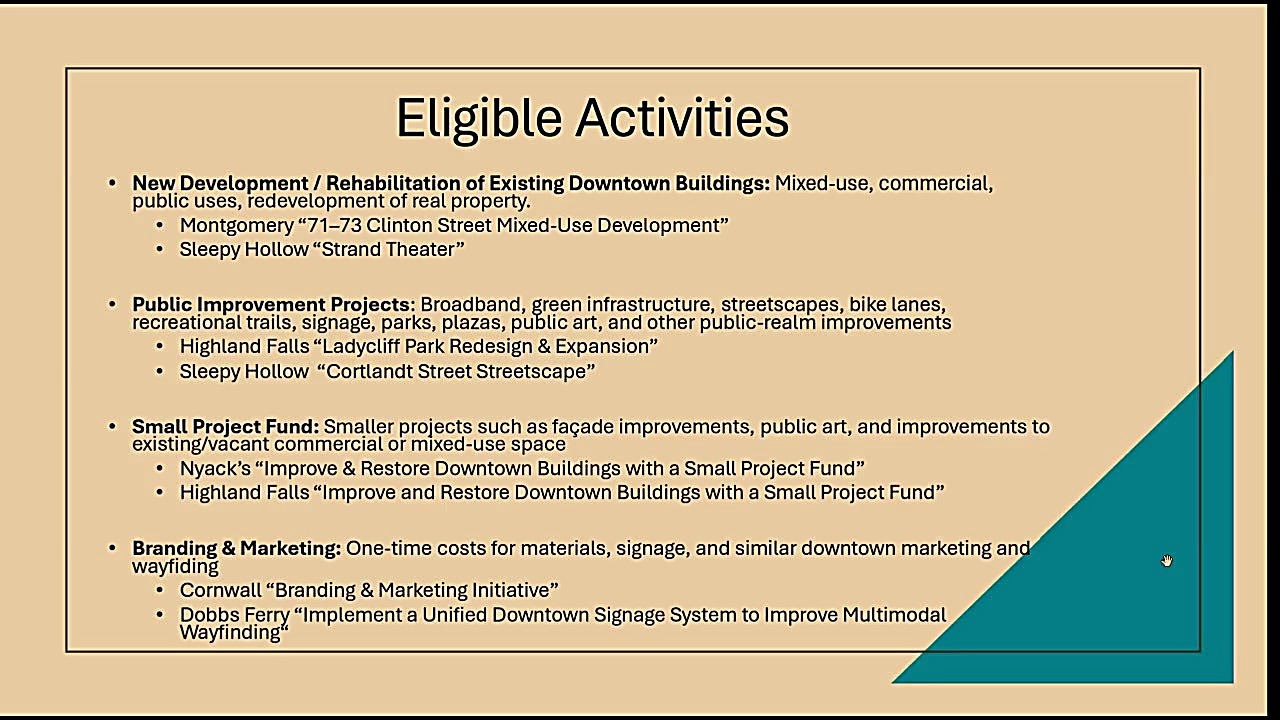
Healy presented seven potential projects: upgrades to the Croton station parking lot; streetscaping along Riverside Avenue and Benedict Boulevard; bike lanes linking Oneida Avenue and Croton Point Avenue; a second phase of Historic Hudson Valley improvements; development at 425 South Riverside Avenue; the Save-Mor Pharmacy project; and a small-project fund for local businesses. The presentation is available in the meeting's source documents.
The parking proposal would seek funding toward a seawall intended to protect flood-prone parking spaces, Healy said. The streetscape work could include benches, trash cans, streetlights and tree pits. The bike proposal would fill a gap between existing routes; Healy said reducing the width of a section of sidewalk could allow the village to retain street parking while adding the lane. These were descriptions of possible projects, not announcements that construction had been funded.
The private projects were also at different stages. Healy said the 425 South Riverside application had only begun its Planning Board process. He said the pharmacy proposal had stalled while additional traffic information was sought, although the owner remained interested in developing the site. The small-project fund could support improvements such as business facades, windows and awnings.
Monastra explained that an award would lead to another process: an open call for projects, review by a local planning committee, and state decisions about which projects would receive funding. Listing a potential project in the village's application would not itself award money to that project.
A town-hall slide shows examples of projects eligible for NY Forward funding; these are not Croton's approved projects. Watch this moment
Monastra put the distinction this way: “it doesn't mean that the village actually gets $4,500,000 and says here, you decide what to do with it.” Read 6:07▶
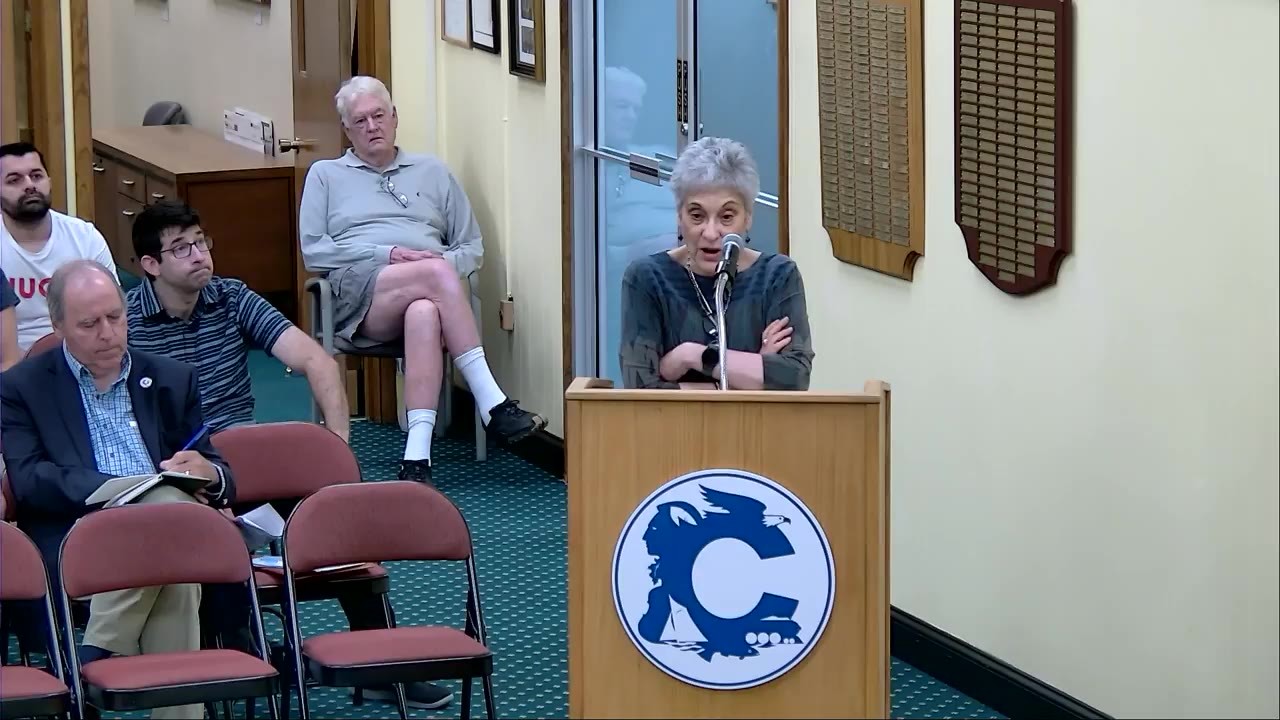
Several residents challenged the extent of community participation. They asked how the boundary and initial projects had been selected, whether people directly affected by development would have a place in planning, and whether residents would have enough information and time to suggest alternatives. Comments also raised concerns about housing and the distribution of the local tax burden.
One resident asked: “I mean, how much is it a symbolic process versus a real process?” Read 61:22▶A resident asks about public input at Croton's September 3 NY Forward town hall. Watch this moment
In the discussion of 425 South Riverside Avenue, Monastra distinguished the grant application from the land-use review. She said the village would retain control over what could be approved at the site through that separate process; inclusion on the grant list did not settle the number of residential units or finalize the development.
Monastra said: “the village will still have full control over what ends up getting built and developed at that site.” Read 62:11▶
Other suggestions focused on practical connections and public space: safer pedestrian access toward ShopRite, repairs to station stairways, places for young families to gather, and trails near the river. Trustee Nora Nicholson described a neighbor's suggestion for a connector trail and proposed developing the canoe-launch area into more of a park.
Sleepy Hollow Mayor Marjorie Hsu offered a caution about timing. Describing that village's NY Forward experience, Hsu said the planning, approvals and contracting had taken considerable time. At the September 3 meeting, the facade program was the one she reported had made progress; the larger village streetscape project was expected to begin in the spring. Her account showed that a grant award and completed construction can be separated by a lengthy process.
Marjorie Hsu said: “The planning process and the final approval took a very long time, and getting the projects to contract is taking even a little longer than that.” Read 22:46▶
Healy said Croton was at the beginning of its own process and would conduct more outreach.
Responding to a request for a timeline and broader community input, Healy said: “We really don't know what the timeline is because the state hasn't released it yet.” Read 44:35▶ As of the meeting, the state had not released the application timetable. Residents could submit comments through the form linked in the village's meeting notice or contact village officials, he said.
Share
Community Discussion
0 comments
One email per new comment on this story. You'll confirm by email first; unsubscribe any time. Your address is never shown publicly.
Be the first to comment on this story.
Sent to the editor for review
This is what you asked us to forward to the Village Board:
An editor reads it first. Once it goes, your comment here
will show a ✓ Forwarded to the Village Board mark —
that is your confirmation.
Coverage of the NY Forward Town Hall Meeting meeting on 2026-09-03,
Village of Croton-on-Hudson, NY.
· Read full transcript
Experimental project: croton.news uses AI to generate articles from public records. Content may contain errors. Please report any inaccuracies and check our corrections log.AI-assisted experimental site — may contain errors. Corrections
Community Discussion
Be the first to comment on this story.
Sent to the editor for review
This is what you asked us to forward to the Village Board:
An editor reads it first. Once it goes, your comment here will show a ✓ Forwarded to the Village Board mark — that is your confirmation.