*How a band of Croton locals forced the HMS Vulture downstream — and accidentally exposed Benedict Arnold's treason*
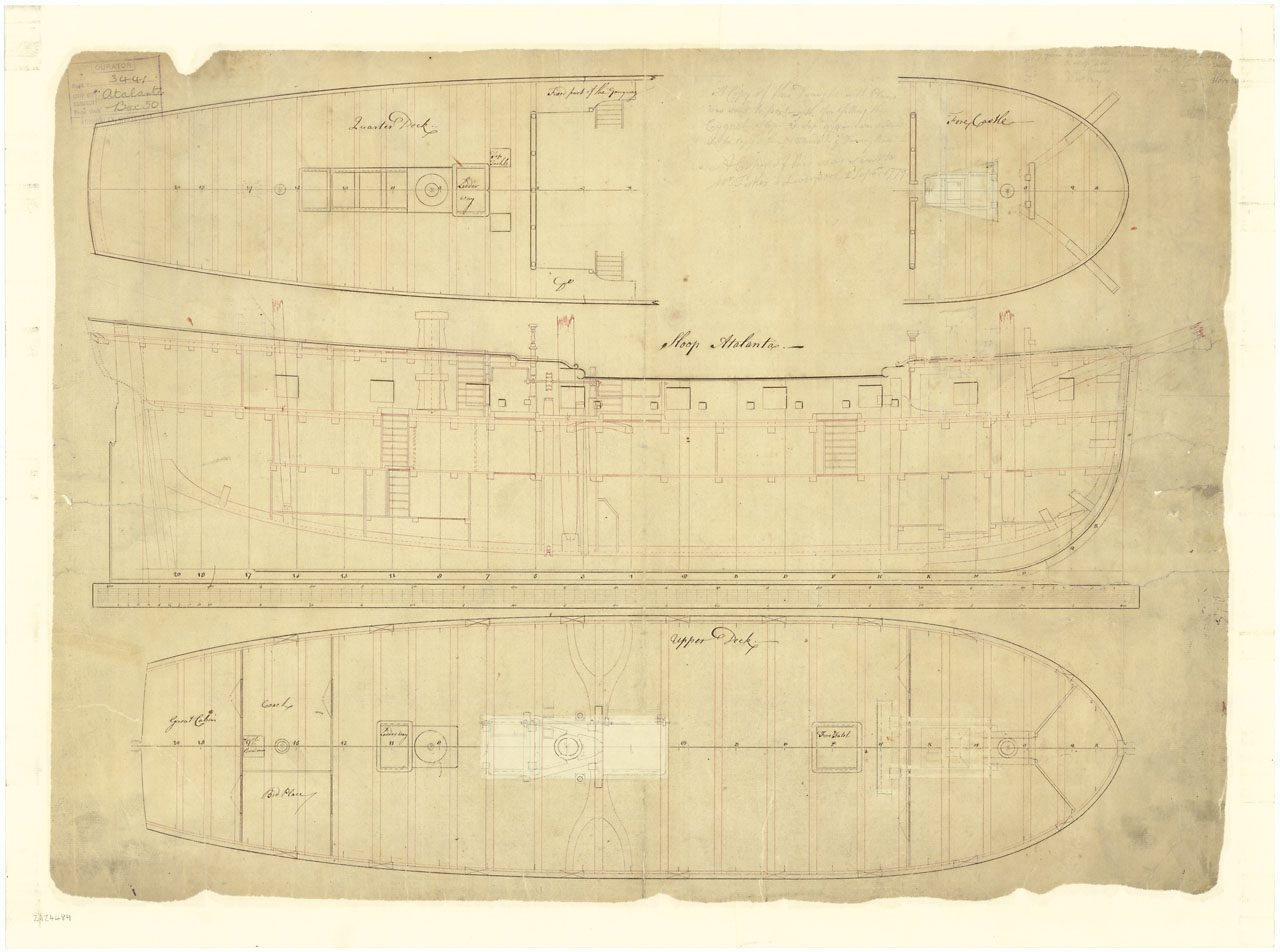
On the evening of September 21, 1780, the British sloop-of-war HMS Vulture rode at anchor in the Hudson River just below Teller's Point — the southernmost tip of the peninsula the Kitchawank had called Navish, and which Dutch and English settlers knew as Croton Point. The Vulture had been in the river for days, her presence a source of unease to the American militia watching from the Westchester shore. No one on the American side knew why she was there.
She was waiting for Major John Andre.
The Secret Meeting
Andre was the head of British intelligence — young, handsome, accomplished, and charged with the most important covert operation of the war. He had come to negotiate with Benedict Arnold, the American general commanding West Point, the linchpin fortress of the Hudson Highlands. Arnold, bitter over perceived slights from Congress and drowning in personal debts, had offered to surrender West Point and its garrison to the British for 20,000 pounds.
The meeting had to happen in person. On the night of September 21, a boat with muffled oars crossed the dark river. Frederic Shonnard, in his 1900 *History of Westchester County*, reconstructed the scene: “Near midnight, Smith, in the boat thus obtained, rowed by two of his tenants, Joseph and Samuel Colquhoun, with muffled oars, proceeded on ebb tide to the 'Vulture' and brought Andre on shore, where he found Arnold awaiting him in the darkness among the fir trees at a lonely unfrequented spot at the foot of the Long Clove Mountain south of Haverstraw village.” [src: shonnard_1900#98e3f90cc604]
Andre came ashore wearing his British officer's uniform beneath a blue greatcoat. He and Arnold talked through the night at the home of Joshua Hett Smith on the west bank, haggling over the price of treason. Arnold handed over detailed plans of West Point's fortifications, troop dispositions, and the locations of artillery — enough information to allow a British assault to take the fortress with minimal losses. The fall of West Point would have severed New England from the rest of the colonies and potentially ended the American Revolution.
The plan was simple: Andre would return to the Vulture at dawn, carrying the plans downriver to British-held New York. Arnold would remain at West Point, ready to weaken its defenses when the British fleet arrived.
The Shot from Teller's Point
But as dawn broke on September 22, the men and women living along the east bank of the Hudson near Croton Point had plans of their own.
The Vulture's presence had been reported to Colonel James Livingston, commander of the American garrison at Verplanck's Point, just north of Croton. The local militia — farmers, fishermen, and tradesmen who knew every inch of the shoreline — asked Livingston for a cannon. Robert Bolton, in his 1848 *History of the County of Westchester*, describes what happened next:
“Many of them now hastened to the scene of action with a field piece, which they had obtained of Col. Livingston, who was in command at Verplanck's Point; and after erecting their little battery on the Point, they opened a well-directed fire against the Vulture. They soon compelled her to slip her cable and hoist sail.” [src: bolton_1881_v1#1480bdd8406d]
Bolton's full account adds crucial details. Before the militia's cannon arrived, two men — **George Sherwood** and **John Petterson** (“Petterson” with a double-t in Bolton's spelling), the latter “a colored man” — had already fired on a boat from the Vulture that was approaching Teller's Point. Bolton records:
“George Sherwood and John Petterson, who were in the vicinity, seized their arms and hastened to the shore, resolved in their own minds that the enemy should not land without opposition. For this purpose they concealed themselves behind the large rocks which still lie on the beach; and as the barge came sweeping along towards the shore, Petterson fired. His aim had been well directed, for an oar was seen to fall from the hands of one of the men on board, and much confusion was observed among them. A second shot, from Sherwood, compelled them to return, which they did under a cover of canister and grape shot from the Vulture, directed to that part of the beach where Sherwood and Petterson were concealed.” (*A History of the County of Westchester*, vol. I, 1848, p. 116-117)
Ninety-two years later the Croton historian **Alvin McCaslin Higgins** retold this vignette in a paper titled “The Story of Croton,” read before the Ossining Historical Society in 1938 and printed posthumously in *The Quarterly Bulletin of the Westchester County Historical Society*, Vol. 16, No. 3 (1940), pp. 49-63. Higgins's version expands the daily-life context that Bolton compressed into a single sentence — the cider-making, the Cowboys/Skinners menace, the muskets leaning against the apple tree:
“Moses Sherwood and John Peterson (the latter a colored man who had served in General Van Cortlandt's Westchester militia) were making cider on the land now known as Orchard Hill and about where the Edward Howard Griggs residence stands. Although the Croton countryside was not occupied by troops, it was, like the rest of Westchester, troubled by the pests that kept farmers awake nights and demanded caution all day long — those two marauding bands of men, the 'Cowboys' and the 'Skinners.' Prepared for them, Moses Sherwood and John Peterson had their muskets leaning against the nearest apple tree. As they worked, they espied the British warship's boat being rowed toward the Croton shore.” (*Higgins, “The Story of Croton,” 1940, p. 55*)
**Note on the name discrepancy.** The first sharpshooter's first name changes across the published record. **Bolton 1848** — writing only 68 years after the event from local witness recollection — gives the name as **George Sherwood**. **Frederic Shonnard**, in his 1900 *History of Westchester County*, gives it as **Moses Sherwood**, and locates the cider-making at “Barrett's farm (now of the John W. Frost estate)” [src: shonnard_1900#69e1a846504a] rather than at Bolton's unnamed “vicinity” of Teller's Point:
“Early on the morning of September 20, two residents of Cortland-town, Moses Sherwood and John Peterson (a colored man, and a soldier of Van Cortlandt's regiment of Westchester militia), who were engaged in making cider at Barrett's farm (now of the John W. Frost estate), Croton, saw a barge filled with men from the 'Vulture' approaching the shore. They seized their guns, which they had taken with them to their work, ran to the river, concealed themselves behind some rocks, and as the barge approached Peterson fired, and great confusion ensued.” (*Shonnard, 1900*)
Higgins 1940 follows Shonnard's “Moses” and further modernizes the location — “Barrett's farm (now John W. Frost estate)” becomes “the land now known as Orchard Hill and about where the Edward Howard Griggs residence stands.” [src: higgins_1940#2d4e58d256b2] The 1948 *Croton on Hudson Golden Jubilee* souvenir then quotes Higgins almost verbatim. So the historiographical chain of the name is **Bolton 1848 (George)** → **Shonnard 1900 (Moses, Barrett's farm)** → **Higgins 1940 (Moses, Orchard Hill)** → **Croton Golden Jubilee 1948 (Moses)**.
Why did the name change between 1848 and 1900? We do not have direct evidence. One plausible explanation is a Sherwood family pension application or genealogical record Shonnard accessed that Bolton did not — the McDonald collection contains an Ensign Stephen Sherwood of Capt. Israel Honeywell's Company, and the Westchester militia rolls include multiple Sherwoods. Another is simple transcription drift across sources. We follow Bolton's “George” in this article as the **oldest** printed reading — but a reader who prefers Shonnard's Moses has a credible alternative line of evidence.
Higgins's text is otherwise almost certainly the direct source the 1948 Golden Jubilee souvenir book drew on for its André section, and it preserves two specific details Bolton leaves implicit: the cider-making site “where the Edward Howard Griggs residence stands” [src: higgins_1940#2d4e58d256b2] (placing the action on what is now Orchard Hill, above the Vulture's anchorage) and the explicit division of labor in the Croton militia response. The two men dropped their cider work, grabbed muskets and powder horns, “ran down into the tangled growth among the trees which lined Croton's shore” [src: croton_jubilee_1948#703fc818b2a2] and “without waiting for the barge to get nearer, both men blazed away.” The barge turned around. Then a second group of Croton neighbors “assembled all the neighbors available to throw harness and trappings on several horses and rode as fast as they could up the Post Road, out the King's Ferry road, to Verplanck's Point where the little fort under Colonel Livingston's command stood sentinel over the Hudson,” [src: higgins_1940#2d4e58d256b2] and Livingston lent them the four-pounder they used at dawn to dislodge the Vulture. “The first shot of the cannon,” [src: higgins_1940#40b9d3c36045] Higgins wrote, “splintered a spar of the warship.” [src: higgins_1940#40b9d3c36045] Higgins's gloss of the muscle-powered effort by farm horses on the Post Road between Croton and Verplanck's Point is more grounded in the local terrain than Bolton's compressed version manages.
The militia's cannon fire was more devastating than the initial musket shots. Shonnard records that “the Americans fired with effect, shivering some of the spars of the vessel, and compelled her to weigh anchor and drop down the river.” [src: shonnard_1900#262daaef5948] One cannonball lodged in an oak tree on the shore, where it remained for more than half a century. When the tree finally decayed and was cut down, Shonnard notes, the ball was removed and “presented by William Underhill to George J. Fisher, M.D., of Sing Sing” — a small artifact connecting the Underhill family of Croton Point vineyards fame to the most dramatic moment of the Revolution in Westchester.
Andre Watches His Escape Disappear
From an upper window of Smith's house on the opposite bank, Andre watched the engagement unfold. Benson Lossing, traveling the Hudson in the 1850s to research his history of the river, wrote that “on the twenty-second of September, 1780, Major Andre saw the war-ship Vulture drop down the river to escape a galling fire from Teller's Point. Fresh from his interview with Arnold, the British spy was anxious to return to New York by the only safe way — the way by which he had come. His uneasiness at the departure of the Vulture from her anchorage may be imagined.” [src: bacon_hudson_river_source#66bffd89e20b]
Andre's uneasiness was justified. With the Vulture gone, he was stranded on the wrong side of enemy lines. Smith refused to row him back to the ship. The only option was to travel overland through Westchester — thirty miles of contested territory controlled by irregular militia, bandits, and “cowboys” loyal to neither side.
Arnold gave Andre a pass identifying him as “Mr. John Anderson” on public business, and Andre changed out of his uniform into civilian clothes — a fateful decision that would, under the laws of war, make him a spy rather than a prisoner of war if captured. He hid the plans of West Point in his stockings.
The Capture
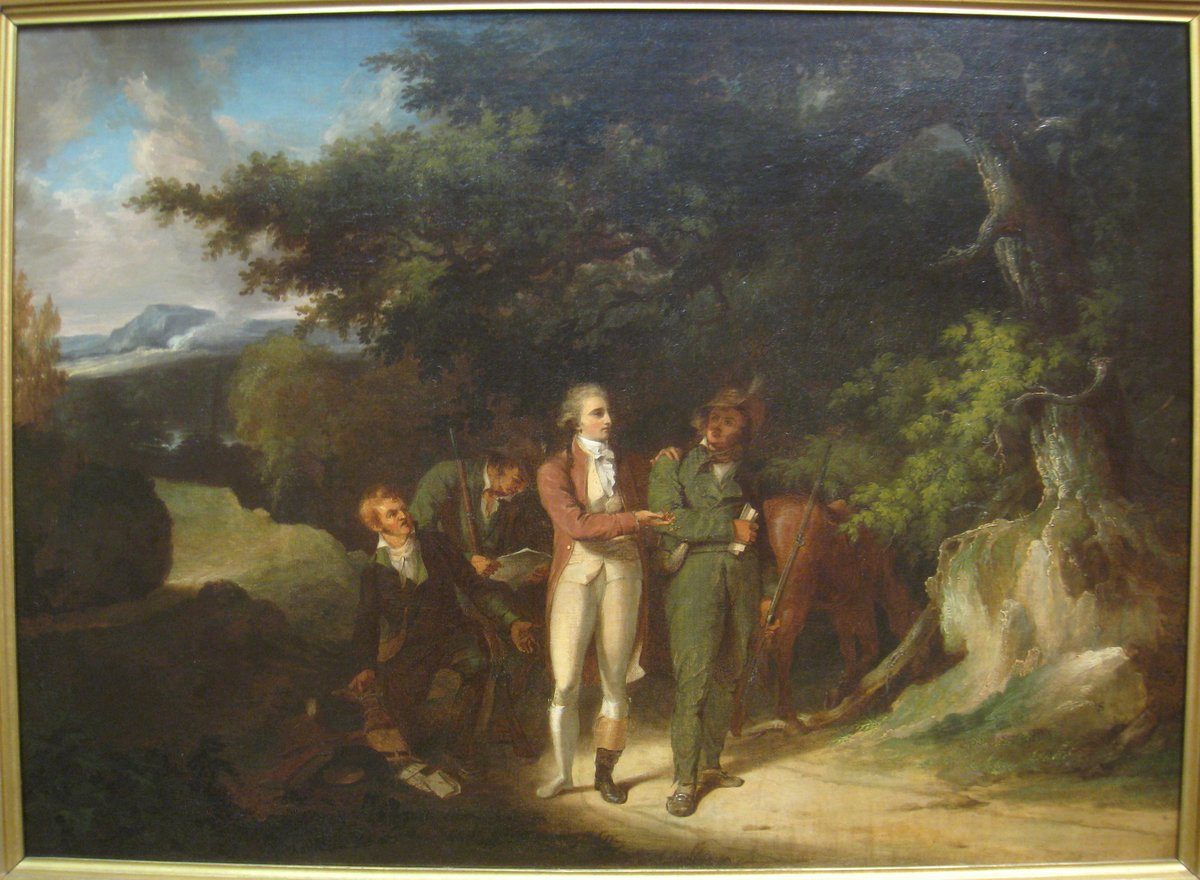
On September 23, near Tarrytown, three young militiamen — John Paulding, David Williams, and Isaac Van Wart — stopped a man in civilian clothes who seemed nervous. They searched him and found the plans. Andre, thinking they were Loyalists, had blurted out that he was a British officer before realizing his mistake. He offered them his gold watch and any sum of money. They refused.
Arnold learned of Andre's capture just hours before Washington arrived at West Point for an inspection. He fled down the Hudson in a barge to the Vulture — the very ship the Croton militia had driven away — and escaped to British lines. Andre was tried by a military tribunal, convicted of espionage, and hanged at Tappan on October 2, 1780.
The Argument Shonnard Made
The standard telling of this story focuses on the three men at Tarrytown — whose names adorn a Westchester County parkway to this day. But Frederic Shonnard, writing in 1900, made a claim that has been largely overlooked by popular historians:
“The great enterprise shown by the Americans on the Westchester shore in bringing a cannon down from Verplanck's Point and firing on the 'Vulture' from Teller's (Croton) Point probably had quite as much to do with the ultimate capture of Andre and salvation of America as any other circumstance, not excepting the formal arrest by Paulding, Williams, and Van Wart.” [src: shonnard_1900#a1df22477ebf]
Shonnard's logic is straightforward. If the Vulture had remained at anchor, Andre would have rowed back to the ship at dawn on September 22 — a trip of perhaps twenty minutes across calm water. He would have arrived in New York with the plans of West Point by nightfall. Arnold's treason would have succeeded. The fortress that controlled the Hudson would have fallen to the British, severing the colonies in two.
Instead, a handful of unnamed Croton locals — farmers and militia who had no idea what they were preventing — hauled a borrowed cannon to the tip of a peninsula where the Kitchawank had once built their fortress, aimed it at one of the most powerful warships in the British fleet, and changed the course of the war.
The identities of most of these militia members are lost to history. Bolton identifies only the two initial sharpshooters — Sherwood and the “colored man” Peterson — and notes that Colonel Livingston lent the field piece. Scharf preserves the detail that the cannonade came from the old Indian fortification site. The cannon fired from the same ground where, 135 years earlier, the Kitchawank had signed the 1645 peace treaty that ended Kieft's War.
The Vulture's captain, unwilling to risk his ship in the narrow channel under artillery fire, weighed anchor and retreated south. In doing so, he sealed Andre's fate — and preserved the American Revolution.
First-Person Testimony: The McDonald Interviews
For 175 years after the event, the story of André's capture rested on the written records of the three men at Tarrytown who received medals — Paulding, Williams, Van Wart — and the sketched naval action recorded by Bolton, Scharf, and Shonnard. But in 1844–1851 the Hudson Valley chronicler **John M. McDonald** interviewed more than 400 Revolutionary War survivors in Westchester County; several of them had been personally involved in the Vulture/Smith/André sequence. In April 2026, as part of this history.croton.news project, we transcribed those interviews from the handwritten manuscript pages for the first time. Reading them together reshapes the story in specific, citable ways.
Benjamin Acker: “I ferried Smith and André across the river, September 22d 1780” [src: mcdonald_interview_benjamin_kipp_666#3368bde226a9]
Benjamin Acker of Ossining, interviewed by McDonald at a fishing camp (“Stymats Fishers”) on November 20, 1847, was a waterman at **King's Ferry** — the crossing point between Verplanck's Point and Stony Point where Smith and André actually made their Hudson crossing. Acker's testimony is first-person and unambiguous: *“I ferried Smith and André across the river, September 22d 1780, and was a witness on Smith's trial.”* (WCHS item 982, manuscript page 979.) Acker is the only primary witness in the entire McDonald collection who physically rowed Major John André across the Hudson River. He would later testify at Joshua Hett Smith's court-martial.
Acker's interview also places him in an earlier ambush party that included John Paulding — the same Paulding who a year later would capture André at Tarrytown. Sometime in the fall before André's mission, Acker was in a party of five men — *“in company with John Paulding, John Requa, David Martling, and Isaac Lent” [src: mcdonald_interview_benjamin_acker_982#858f1a989daa]* — lying in wait in the bushes above Judge Kenney's place, watching a British frigate anchored off Sparta. A boat from the frigate came ashore with nine men and a woman; Acker's party let the woman land and then rose and fired, killing two, wounding two, taking the other five prisoner, and letting the woman go. Paulding is placed inside a small-unit armed ambush on the Hudson coast before he was ever famous. No published history of the Paulding-André story preserves this earlier engagement.
Hannah Hoag: the 1779 British Landing at Teller's Point
Hannah Hoag, interviewed by McDonald on October 31, 1846, was at the point of the peninsula as a young woman in 1779 — *the year before* the cannonade — and saw a British army unit land there. *“I saw the British army when they landed at Tellers Point and marched up. They then encamped one night at on Colberg Hill, a short distance east of the Post road, and marched the next day to Verplank's Point.” [src: mcdonald_interview_hoag_hannah_646#622009228c4f]* [src: mcdonald_interview_hoag_hannah_646#622009228c4f] The British had been using Teller's Point as an amphibious staging ground before the Croton militia turned the same geography against them in September 1780. Hoag's account is the earliest-dated eyewitness report of British operations at Croton Point in any primary source we have recovered, and it places a British encampment at Colberg Hill — east of the Post Road — that has been lost from the published landscape.
Thomas Strang: André Detained Overnight at Crompond
On October 6, 1845 Thomas Strang (1763–1851), interviewed at Yorktown, preserved a previously-missing stop on André's journey south. *“Joshua Hett Smith and Major André were stopped at or near Crompond by a Sergeant's guard… Boyd refusing to let them go till morning, notwithstanding Arnold's pass, because they could not give the Countersign.” [src: mcdonald_interview_strang_thomas_380#672f340992b2]* (WCHS item 380, manuscript pages 370-379.) André and Smith — traveling south after the Vulture had been driven from its anchor and the plans of West Point had been hidden in André's stockings — were stopped at the **Crompond militia guard house** on the night of September 22, 1780 by **Sergeant Crawford**, a one-eyed militiaman, and **Captain Boyd**. Arnold's written pass, which named André as “Mr. John Anderson on public business,” was insufficient to satisfy Boyd because Smith and André could not give the countersign. They were held under guard all night. Strang's father, Captain Henry Strang, was commanding the militia patrol that night, and the young Thomas saw the two travelers pass the family house at sunrise the next morning, heading for Pines Bridge.
The published timelines of André's capture have an unexplained overnight gap between the Hudson crossing and the morning ambush at Tarrytown. Strang fills that gap: André spent the night in a militia guard house at Crompond, detained on suspicion, on Benedict Arnold's own pass.
John Yerks: Seven Men Captured André, Not Three
Perhaps the most surprising finding in the McDonald collection on this episode is the interview with **John Yerks** (1758–1848), conducted on November 12, 1845. Yerks is not a famous name in the André story — he never received a medal, a pension, or a farm from Congress for his role in the capture. But in his own 1845 deposition he says he was one of *seven* men in the ambush party on the morning of September 23, 1780. Three men — Paulding, Williams, and Van Wart — watched the Albany Post Road. The other four — **John Yerks, James Romer, Isaac See, and Abraham Williams** — ambushed a parallel “Refugee's path” along which they expected British irregulars to travel.
Yerks's own words: *“Paulding, Van Wert, and Williams watching the Post Road, and the other four ambushing the Refugee's path… The proceeds of André's horse and watch and the moneys found upon him we shared equally between the seven; but when the medals and pensions were given by Congress it caused many heart burnings and complaints, the four thinking they deserved as much reward as the three, and always believing that Paulding and the two others misrepresented the affair to congress and the public authority. I and all the descendants of the four think to this day that they were ill-treated and feel bitterly about it.”* (WCHS item 435, manuscript pages 427–434.)
The famous three-man capture of André is, according to Yerks, the truncation of a seven-man operation. The seven men split the proceeds of André's horse, watch, and money equally among themselves; Congress later awarded medals and pensions only to the three who were physically in the ambush at the moment of the capture. The four uncredited captors — Yerks, Romer, See, and Williams — carried the grievance across multiple generations. Yerks is the only one of the four whose first-person testimony we have. His deposition is, in effect, a 65-year-late corrective to the official capture narrative.
John Romer: Breakfast, a Pewter Basin, and Paulding's Warning to “Aunt Fanny”
**John Romer** (1764–1855), interviewed on November 30, 1848, was a child at the Romer family farm in Mount Pleasant the morning of André's capture. His mother Frena Haerlager Romer prepared breakfast for the seven-man ambush party and packed them a dinner in a pewter basin. When Paulding's group later came back through the Romer farm with the captured prisoner, they would not say who André was directly. *“The three captors of André stopped at my fathers in the morning before day and took breakfast, and took with them a dinner prepared by my mother and deposited in a pewter basin… Paulding said to her: 'Aunt Fanny, take care what you say now. I believe we've got a British officer with us, and if you take on badly it may be an injury to you.'” [src: mcdonald_interview_romer_john_798#e8184c55d83e]* (WCHS item 798, manuscript pages 785–797.) John Romer — Frena's son, not yet twenty — was sent back later to the capture site to recover the pewter basin with the uneaten dinner still inside it.
Romer's interview is a material-culture corroboration of Yerks's claim that seven men were in the ambush party. Paulding's warning to Frena Romer — *“Aunt Fanny, take care what you say now” [src: mcdonald_interview_romer_john_798#e8184c55d83e]* — is a literal line of dialogue from one of the three medal-bearing captors, preserved in a second witness's family memory. The pewter basin in which Mrs. Romer packed the dinner is the kind of domestic detail that survives only in oral tradition.
Samuel Chadeayne: André's Last Breakfast at the Widow Budd's
Samuel Chadeayne of Yorktown, interviewed by McDonald in 1845, identified the specific house where André and Smith ate breakfast on the morning of September 23 — after leaving Crompond at sunrise but before reaching the Tarrytown ambush. *“The house where he and André took breakfast on the morning of his capture was the house of the widow Budd at [place].” [src: mcdonald_interview_chadeayne_samuel_1169#3a5d5a664789]* [src: mcdonald_interview_chadeayne_samuel_1169#0209c83737f4] The widow Budd's house, per Vail Lydia's separately recorded 1847 testimony [src: mcdonald_interview_vail_lydia_1353#c49371bae10f], *“stood below the Croton, and at Pines Bridge on the left side of the road leading to White Plains.”* A specific named house at Pines Bridge for André's last meal — a detail absent from every published biographical account of André.
Benjamin Kipp: “I saw André pass here the day he was captured” [src: mcdonald_interview_benjamin_kipp_and_gilbert_kipp_1208#40fa7a9a7083]
Benjamin Kipp (1763–1849), interviewed on October 23, 1847 together with his brother Gilbert [src: mcdonald_interview_benjamin_kipp_and_gilbert_kipp_1208#3bfbd920bf07], adds a third local eyewitness. *“I saw André pass here the day he was captured. Although not in military dress, he was supposed to be an officer, and everybody wondered to see him travelling alone so early in the morning. He enquired about the road to White Plains of several persons. One shewed the road to White Plains and that to Tarrytown. Another told him that the Americans had lately been on the White Plains road near Youngs's corner.” [src: mcdonald_interview_benjamin_kipp_and_gilbert_kipp_1208#40fa7a9a7083]* A nineteen-year-old Benjamin Kipp, living in New Castle, saw André passing through the village on his final morning, asking strangers for directions and attracting suspicion because he was traveling alone so early. Kipp's account establishes that André was already being noticed as a suspicious solitary traveler several miles before Paulding's ambush party stopped him.
David Hammond: “My God! Am I so far off yet”
**David Hammond** (c.1768–1854), interviewed by McDonald on November 29 [src: mcdonald_interview_hammond_david_c_1768_1854_802#4e2939fb9bc5], was twelve years old when André passed through. His testimony adds two extraordinary pieces to the chain: a direct personal encounter, and the most detailed route reconstruction from any primary source.
André stopped at the Hammond family house on September 23, 1780:
*“Major Andre called at my father's house on the 23d of September 1780, asked for a drink of water. My sister brought water from the spring, and he asked me to hold his horse, whilst he drank, which I did. He then asked how far it was to White Plains. My mother told him eight miles. 'My God!' said he, holding up his hands 'am I so far off yet.'”*
The twelve-year-old David held André's horse. His sister brought the water. His mother gave the distance. André's response — hands raised, the exclamation of a man realizing he was still eight miles from safety — is one of the most vivid firsthand-chain moments in the entire McDonald collection. A marginal note in the manuscript reads: *“Van Wart used to come to my mill where he told me all.”*
Hammond then provides the precise route André took after leaving Pines Bridge, sourced directly from captor Isaac Van Wart at Hammond's own mill:
André went from Pines Bridge on the road to White Plains about **six miles to Russell's corner**, where — instead of continuing to White Plains — he turned onto the Tarrytown road. He traveled about **two and a half miles** to the Rogue house, then took **a field path about three-quarters of a mile** through open country that came out at **Isaac Read's Tavern**, about **one and a half miles from the capture site**.
A marginal note adds: *“The road he took at Russell's corner would have brought Andre out on the Post road at Reeds store on the hill side, had he not taken the path across the fields.”*
This is the most detailed waypoint-by-waypoint itinerary of André's final journey in any primary source we have found. It establishes that André made a specific navigational choice at Russell's corner — turning toward Tarrytown instead of continuing to White Plains — and that this choice, not a random encounter, placed him on the road where Paulding's party was waiting.
Samuel Chadeayne: The Woman Who Tried to Save André
A second Chadeayne interview (WCHS item 1386, October 16) adds a previously unknown encounter. A young woman named Martha Williams was visiting a house near Pines Bridge on the morning of September 23:
*“A young gentleman (always supposed to be Andre) rode up... enquired the road to White Plains... She particularly cautioned not to mistake the Tarrytown for the White Plains road... In spite of all this... he took the Tarrytown road. Mary Williams... always thought that Andre took the Tarrytown road by mistake.”*
If Chadeayne's account is accurate, André was specifically warned not to take the Tarrytown road — the road that led to his capture — and took it anyway. Martha Williams spent the rest of her life believing she had tried and failed to save a man from the gallows.
What the McDonald Testimony Changes
Read together, the five first-person accounts — Acker, Hoag, Strang, Yerks, Romer, Chadeayne, and Kipp — turn the Vulture/Smith/André sequence from a three-vignette legend (Vulture cannonaded → Smith refuses to row → Tarrytown ambush by three militiamen) into a chain of specific, locally-witnessed events:
1. **1779:** British army amphibious landing at Teller's Point, encamped one night at Colberg Hill, marched to Verplanck's Point the next day. [src: mcdonald_interview_hoag_hannah_646#622009228c4f] 2. **September 22, 1780:** Benjamin Acker, waterman at King's Ferry, ferries Smith and André across the Hudson. Acker is later a witness at Smith's court-martial. [src: mcdonald_interview_benjamin_acker_982#858f1a989daa] 3. **Night of September 22, 1780:** Smith and André, riding south with Arnold's pass, are stopped at the Crompond militia guard house by Sergeant Crawford and Captain Boyd, who detain them overnight because they cannot give the countersign. [src: mcdonald_interview_strang_thomas_380#ec92492b6979] 4. **Dawn of September 23, 1780:** Smith and André released at sunrise, pass Strang's father's house on the Crompond road heading south. Stop for breakfast at the widow Budd's house at Pines Bridge. [src: mcdonald_interview_strang_thomas_380#ec92492b6979][src: mcdonald_interview_chadeayne_samuel_1169#0209c83737f4][src: mcdonald_interview_vail_lydia_1353#c49371bae10f] 5. **Mid-morning September 23, 1780:** André, travelling alone in civilian clothes, is observed by Benjamin Kipp at New Castle asking for directions to White Plains. [src: mcdonald_interview_benjamin_kipp_and_gilbert_kipp_1208#3bfbd920bf07] 5a. **Between Pines Bridge and Tarrytown:** André stops at Staats Hammond's house for water. His mother tells him White Plains is eight miles away. André exclaims: “My God! Am I so far off yet.” A young woman named Martha Williams at a nearby house warns him not to take the Tarrytown road; he takes it anyway. He proceeds six miles to Russell's corner, turns onto the Tarrytown road instead of continuing to White Plains, travels 2.5 miles to the Rogue house, takes a field path three-quarters of a mile to Read's Tavern, and is captured about 1.5 miles beyond. [src: mcdonald_interview_hammond_david_c_1768_1854_802#4e2939fb9bc5][src: mcdonald_interview_chadeayne_samuel_c_1770_c_1854_1386#26f5f3e0863e] 6. **Early morning September 23, 1780, at Jacob Romer's farm near Tarrytown:** The seven-man ambush party — Paulding, Williams, Van Wart, Yerks, James Romer, Isaac See, Abraham Williams — rises at Frena Romer's table for breakfast and packs dinner in a pewter basin. They split into two groups: three to watch the Post Road, four to ambush a parallel Refugee path. [src: mcdonald_interview_romer_john_798#e8184c55d83e][src: mcdonald_interview_yerks_john_435#f0fb7268907a] 7. **Approximately 10–11 a.m., September 23, 1780:** Paulding's three stop André on the Post Road near the old Dutch church, find the West Point plans in his stockings, and bring him back to Jacob Romer's house. The seven men split the proceeds of the horse, watch, and money equally. Paulding warns Frena Romer not to speak loosely because their prisoner is a British officer. [src: mcdonald_interview_yerks_john_435#f0fb7268907a][src: mcdonald_interview_romer_john_798#e8184c55d83e] 8. **Same afternoon:** The prisoner and his captors proceed to Milesquare (modern Armonk), where they deliver André and the West Point plans to Lt. Colonel John Jameson. [src: mcdonald_interview_yerks_john_435#f0fb7268907a] 9. **The subsequent congressional award** goes only to Paulding, Williams, and Van Wart — leaving Yerks, James Romer, Isaac See, and Abraham Williams uncredited. The four and their descendants preserve the grievance through at least three generations. [src: mcdonald_interview_yerks_john_435#f0fb7268907a]
This is the chain of events *as reported by the participants themselves*, 65 to 70 years after the fact. The Vulture cannonade from Teller's Point, which is the act the traditional story credits for making André's capture possible, is only one link in the chain. The Crompond overnight detention — never previously documented — is another. And the full ambush party at Tarrytown was more than twice the size that the Congressional medal-roll preserved.
Sources Consulted
- Bolton, Robert Jr. *A History of the County of Westchester*, Vol. I (1848), pp. 116-117 (the Vulture/Sherwood/Petterson cannon narrative). Internet Archive identifier: `historyofcountyo01bolt`. **This is the primary source for the cannon-at-Teller's-Point episode**, including the verbatim "concealed themselves behind the large rocks which still lie on the beach" and "His aim had been well directed" passages quoted above. The "George Sherwood" first name comes from Bolton.
- Shonnard, Frederic & W.W. Spooner. *History of Westchester County* (1900). Internet Archive identifier: `historyofwestche00inshon`. Cited above for the cannon-fire-at-the-Vulture quotation, the cannonball-in-the-oak-tree anecdote, and the Underhill→Fisher provenance of that artifact.
- Scharf, J. Thomas. *History of Westchester County, New York*, 2 vols. (Philadelphia, 1886). Internet Archive identifiers: `historyofwestche00scha` (vol. I) and `historyofwestche02scha` (vol. II). Cited in this article for general Westchester historiographical context. Note: an earlier draft of this article attributed the Sherwood/Petterson concealment passage to Scharf 1886; that attribution is incorrect. Both Scharf volumes have been searched (about 1.4 million words) and contain no Vulture-cannon narrative. The passage is from Bolton 1848 vol. I.
- Lossing, Benson. *The Hudson River from Ocean to Source* (1866). Cited above for Andre's view of the Vulture's withdrawal from an upper window of Smith's house.
- Higgins, Alvin McCaslin. "The Story of Croton." Paper read before the Ossining Historical Society, 1938; published posthumously in *The Quarterly Bulletin of the Westchester County Historical Society*, Vol. 16, No. 3 (1940), pp. 49-63. Free PDF: westchesterhistory.com/quarterly-journal/
- *Croton on Hudson Golden Jubilee, 1898-1948* (Croton-on-Hudson: Croton Golden Jubilee Committee, 1948). HathiTrust htid nyp.33433062496793, seq 14 (Brief Historical Sketch by O. Wendell Hogue and Veronica Gilbert Agne). The André section in this souvenir book is a direct copy of Higgins 1940.
- The **McDonald Interviews** collection (WCHS), as transcribed by this project from the Westchester County Archives digitization (2025). Specific items cited in the forensic section above: Acker (WCHS 982), Hoag (WCHS 646), Strang (WCHS 380), Yerks (WCHS 435), Romer (WCHS 798), Chadeayne (WCHS 1169), Vail Lydia (WCHS 1353), Kipp Brothers (WCHS 1208), Hammond (WCHS 802), Chadeayne second interview (WCHS 1386).
All direct quotes are verbatim from the cited sources. Each factual claim was verified against the Croton Historical Archive database.