Joseph Arnow, architect, representative for Donald & Elizabeth Laird, owners---71 Irving Ave---Located in a RA5 Residence District and designated on the Tax Maps of the Village of Croton-on-Hudson as Section 79.05 Block 4 Lot 46. Request for a front yard variance from Village Zoning Code Section 230-33(A) for a proposed addition including front entry and mudroom.
Coleman Clancy & Kate Saxton, owners---40 Young Ave---Located in a RA5 Residence District and designated on the Tax Maps of the Village of Croton-on-Hudson as Section 79.13 Block 2 Lot 45. Request for a variance from Village Zoning Code Section 230-40C for a proposed fence taller than 30 inches within the triangle centered at the street lines and within 30 feet of the lot corner.
The Croton Zoning Board of Appeals heard and approved two variance requests at its May 19 meeting, both with no public opposition.
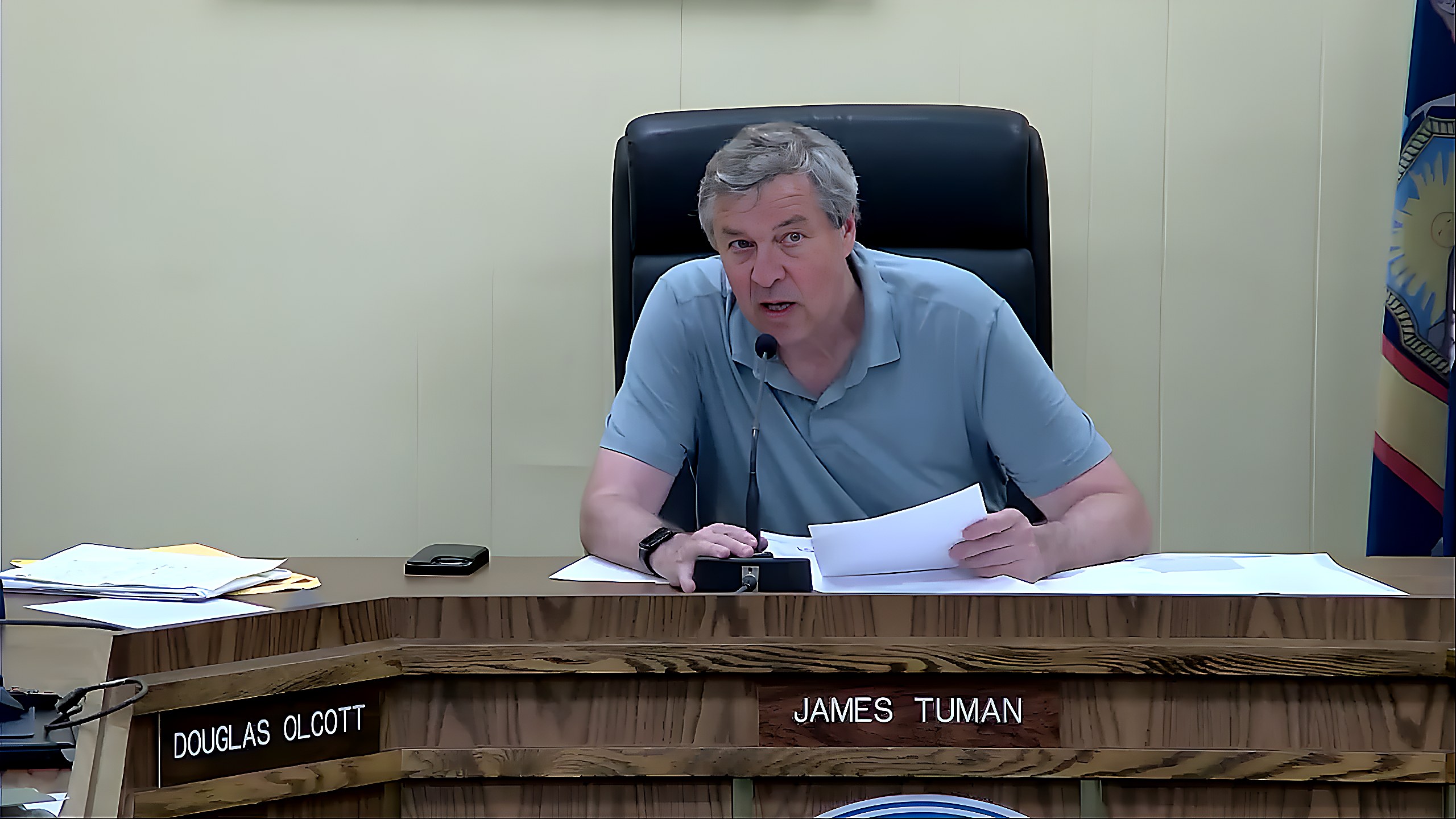
ZBA Chairman James Tuman and ZBA Board Member Doug Olcott during discussion of a front setback variance for 71 Irving Avenue at the Zoning Board of Appeals meeting.
Irving Avenue addition
Don Laird and Betsy Laird received a 1.5-foot front yard setback variance for their home at 71 Irving Avenue to build a front mudroom, second-floor closet, and a portico, along with a full second story and attic above the existing one-and-a-half-story house.
The property sits at the end of a dead-end street in the RA-5 zoning district. According to architect Joseph Arnow, the existing house has a 19.4-foot front setback based on a 2016 survey, leaving 4.4 feet of remaining setback after accounting for the 15-foot requirement. The mudroom addition needs five feet of depth, requiring an additional 1.5 feet of relief.
The open portico — eight feet wide and six feet deep — falls within the permitted setback and requires no variance. The board previously granted a two-foot front yard variance in 2019 for an existing deck on the northeast side of the house, which will remain in place.
Arnow presented a second design option with a dormer that the board found stylistically consistent with Sears homes found in the village. Board members described both designs as contextual and an improvement to the property.
The board found that the variance would not change the neighborhood character, could not be achieved by another method — without the additional 1.5 feet, the mudroom would be too narrow to function — was not substantial, would have no adverse environmental impact, and that the difficulty was self-created. No neighbors spoke at the public hearing.
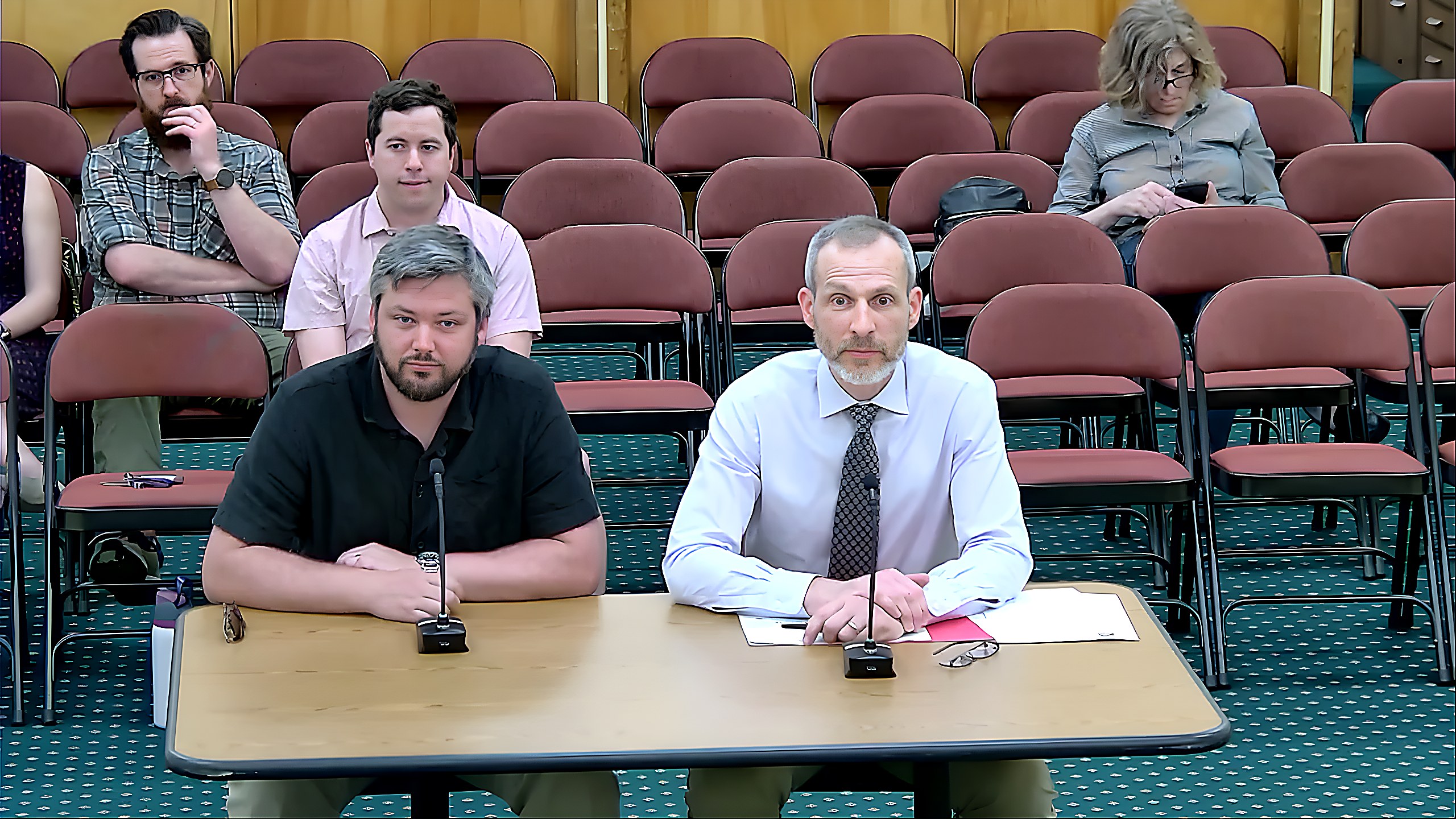
Applicants sit at the presentation table during discussion of a front setback variance for an Irving Avenue addition.
Young Avenue fence
Coleman Clancy received an 18-inch fence height variance for the corner property at 40 Young Avenue and Benedict Boulevard, allowing a 48-inch open metal fence within the corner sight triangle where village code limits fences to 30 inches.
Clancy told the board the fence is needed for safety as his family grows. His daughter is five months old, and the family may get a dog. A 30-inch fence, he said, would not reliably contain either. The previous owners received an identical variance from the ZBA in 2023 — same height, same 25% solid limit — but never built the fence, and the variance expired after one year.
The proposed fence is black aluminum with open construction, approximately 75% open space. Clancy said it would be installed on the property line, several feet back from the sidewalk, not extending into the public right-of-way.
Two neighbors spoke in support. John Farrell of 34 Young Avenue, immediately next door, said his own similar fence created no visibility issues and described how his dog had been hit by a car on Benedict Avenue before a taller fence was installed. Julie Evans, on the other side, said a 60-year-old privet hedge had previously stood at least four feet tall in the same location and was more obtrusive than the proposed open fence.
Steve Krisky noted that the application did not include the same conditions as the 2023 variance and recommended the board impose them again: a four-foot maximum height and 25% or less solid construction. The board agreed and incorporated those conditions.
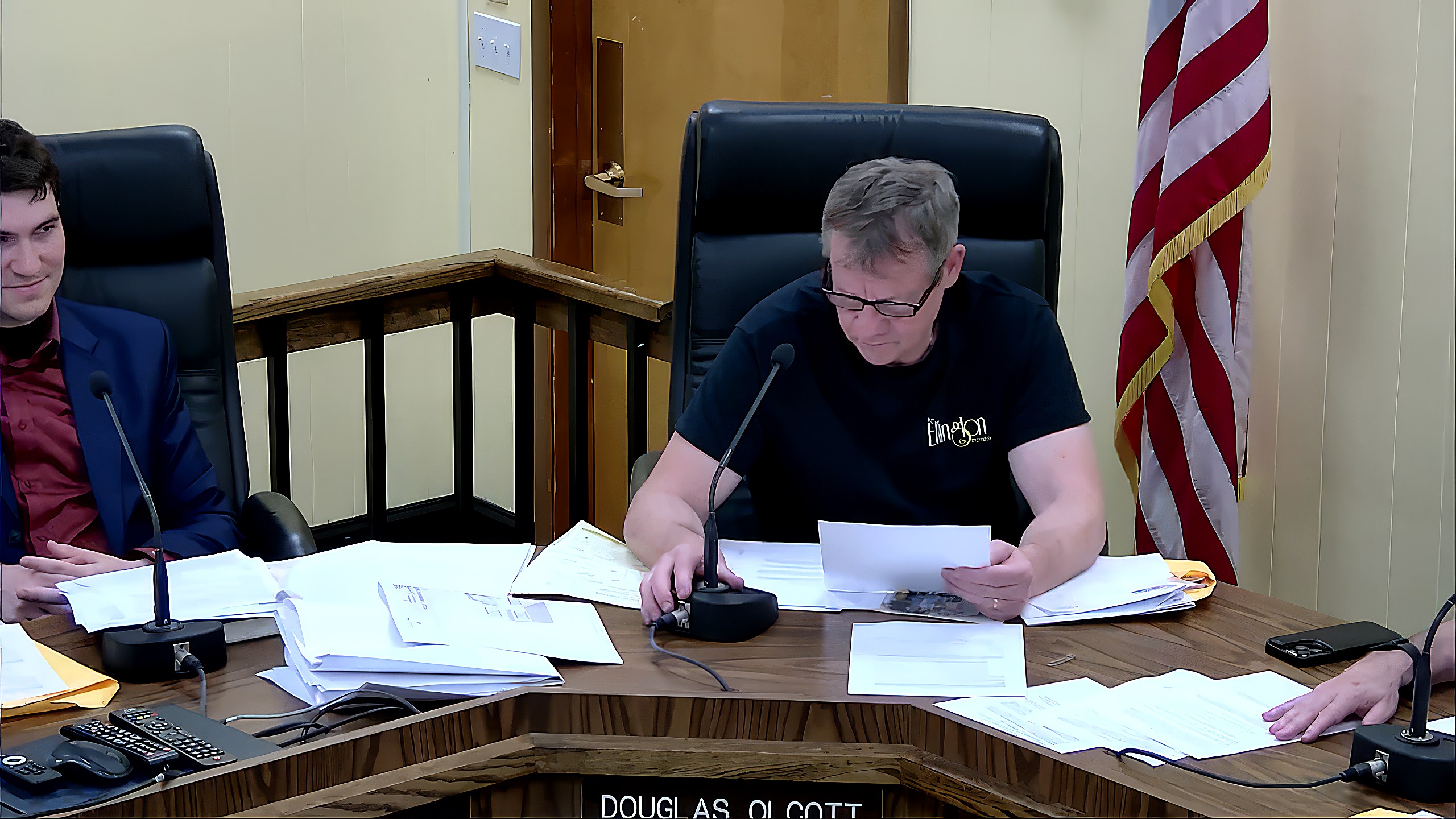
ZBA Board Member Doug Olcott during discussion of the 71 Irving Avenue variance at the Zoning Board of Appeals meeting.
On the five-factor test, the board found no detriment to neighborhood character, that the benefit could not be achieved by another method given the 25% solid condition, that the variance was substantial but mitigated by the distance between the property line and the street, that there would be no adverse environmental impact, and that the difficulty was self-created.
The board also approved minutes from its March 17 and April 21 meetings.
Attachments from the meeting packet, grouped by agenda item — each links to a searchable text page and the village's original PDF.
Full meeting record with summaries →
NEW PUBLIC HEARING — Coleman Clancy & Kate Saxton, owners---40 Young Ave---Located in a RA5 Residence District and designated on the Tax Maps of the Village of Croton-on-Hudson as Section 79.13 Block 2 Lot 45. Request for a variance from Village Zoning Code Section 230-40C for a proposed fence taller than 30 inches within the triangle centered at the street lines and within 30 feet of the lot corner.
NEW PUBLIC HEARING — Joseph Arnow, architect, representative for Donald & Elizabeth Laird, owners---71 Irving Ave---Located in a RA5 Residence District and designated on the Tax Maps of the Village of Croton-on-Hudson as Section 79.05 Block 4 Lot 46. Request for a front yard variance from Village Zoning Code Section 230-33(A) for a proposed addition including front entry and mudroom.
Experimental project: croton.news uses AI to generate articles from public records. Content may contain errors. Please report any inaccuracies and check our corrections log.AI-assisted experimental site — may contain errors. Corrections