Croton-on-Hudson, NY · Friday, October 23, 2026· Oct 23, 2026Independent, AI-assisted local reporting from public recordsSource-linked·Corrections welcomed
Westchester Was Scheduled to Seek Dismissal of Plate-Reader Lawsuit on September 11
Westchester was scheduled to file a dismissal motion on September 11 in the license-plate surveillance case; this article does not yet report whether it did. Court records, Croton’s police presentations and Rekor’s proposed privacy standard leave key questions about outside access unresolved.
Westchester County was scheduled to seek dismissal of the lawsuit challenging its license-plate surveillance system on September 11, under a schedule Justice Walter Rivera signed September 3.
The signed order lists October 26 for the plaintiffs’ opposition, November 25 for the county’s reply, and December 2 as the return date. It does not set a date for a ruling.
The county’s dismissal filing could also help clarify a question left by Croton’s police presentations: when do outside agencies need a warrant to obtain the county’s camera records? January minutes described a judicial-warrant requirement. At an August presentation, police described requests supported by an active investigation and a case number, while qualifying their knowledge of county procedures.
What the county filed
The September order adopts a schedule proposed by Associate County Attorney Sean T. Carey with the plaintiffs’ input and consent. His September 2 letter says the court had allowed the defendants until November 20 to move for dismissal at an August 19 conference, but that they expected to act sooner. That supersedes the August 31 response date reported in our earlier coverage.
The official docket checked September 8 contained neither the anticipated dismissal motion nor an answer. As of that check, the county had announced its intended next step, but the letter does not explain its legal grounds for dismissal. The schedule also preserves both sides’ ability to seek adjournments.
The June 9 complaint, *Umemoto v. Westchester County*, challenges the collection, retention, analysis and sharing of vehicle-location records. The plaintiffs allege unreasonable searches under the state constitution and a lack of legislative authority for the system, with an alternative claim that a broad delegation of that power would itself be unconstitutional. They seek orders stopping its operation and public spending on it. The scheduling order does not decide those claims.
The defendants are the county, its Department of Public Safety and two county officials in their official capacities. Neither Croton nor Rekor is a defendant in the complaint.
Different accounts of outside access
The January 15 Police Advisory Committee minutes, page 2, distinguish participating local law enforcement from outside jurisdictions. In their account of Detective Fielding’s report, the minutes state: “Data is not available to ICE or other agencies without a judicial warrant,” and say only information requested in that warrant can be shared.
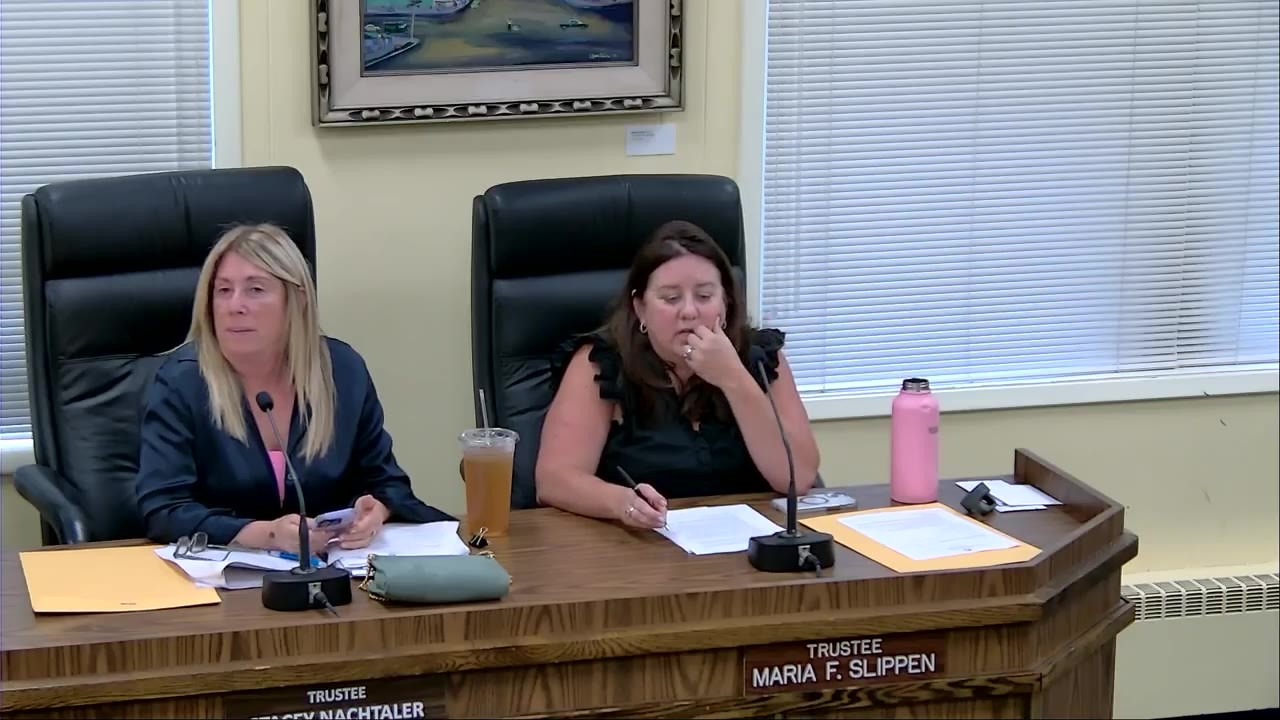
At the August 19 Board of Trustees meeting, Detective Mark Fielding said someone from a federal agency would need to contact county police for data and have an active investigation.Read 39:23▶ He later described a governmental agency contacting the county with a case number to obtain an investigative lead or data.Read 43:34▶Trustees at the August 19 village meeting cited in this report on access to license-plate-reader data. Watch this moment
That was separate from an earlier passage about his own requests for Flock records outside Westchester, which he said went through another agency or crime-analysis center and required an active criminal investigation and case number.Read 30:22▶
Fielding also qualified his knowledge of county procedures. He explained that he was a Croton officer assigned to the Real Time Crime Center, not a county police officer, and said he could not speak for the county.Read 40:14▶ Later, comparing his outgoing requests with requests coming into the county, he said he imagined the processes were similar.Read 57:21▶
A case number is not itself judicial authorization; New York’s definition of a search warrant makes it a court order. But Fielding’s August remarks did not explicitly say that a warrant was unnecessary. The January minutes and August remarks give different accounts of outside access; they do not establish that a formal warrant requirement was dropped.
The distinction matters to the lawsuit. Paragraph 55 of the complaint alleges that officers need no judicial warrant or evidentiary threshold to search the database. The preceding paragraph acknowledges a general department policy permitting law-enforcement purposes or authorized background investigations, while arguing that it offers no meaningful limit. The September order does not resolve that dispute.
Rekor proposes a judicial check
On August 31, Rekor called for a national ALPR standard that would immediately protect plate information when a vehicle does not match an authorized alert list. Under its proposal, a vendor would validate a warrant or court order before narrowly specified protected records could be re-identified.
The company also proposed retention tied to the purpose and seriousness of an alert, auditable access and checks against alteration of supporting images or video. It urged agencies to put these protections into purchasing requirements and operating policies.
“ALPR is too important to eliminate and too powerful to operate without enforceable limits,” Rekor chair and chief executive Robert A. Berman said in the release.
This is a proposed industry standard. The release does not mention Westchester or *Umemoto*, and it does not establish which protections the county currently uses.
Fielding had told Croton trustees on August 19 that the county was moving away from Rekor and keeping the system on county premises.Read 34:57▶ He anticipated savings on annual service fees once the migration was complete.Read 35:16▶ Those were reports of work in progress, not confirmation that a replacement system was already operating.
The county’s September 11 filing was the next scheduled step in the case. Its legal arguments and the rules governing access to the records will matter more than a change of software vendor.
Documents and meetings behind this story
Most of these are public records, and
those links go to original public records or our meeting pages. Rows marked “Reported elsewhere” are outside news
reports we cite but did not produce.
Signed order setting Sept 11 / Oct 26 / Nov 25 / Dec 2 dates
Reported elsewhere · 2026-09-03 · New York State Supreme Court, Westchester County (NYSCEF) — scheduling order, Umemoto v. Westchester County
New York State Supreme Court, Westchester County (NYSCEF) — scheduling order, Umemoto v. Westchester County
●Local Law 7 of 2026 adopted 5-0 on June 17 (Resolution #118-2026); effective on state filing July 14
●The local law requires paper notice to the Village Clerk by hand delivery, certified mail or overnight service, with proof of delivery
●Email, the village website, report-an-issue apps, and village social media are expressly declared insufficient
●The public hearing drew no speakers; scheduling passed on the May 20 consent agenda without discussion
●The Calabrese ruling addressed Albany’s particular reporting system and notice statute; it did not establish that every electronic report in Croton previously qualified
Croton-Harmon opens school with tighter device limits and new phone procedures
●Local Law 10 of 2026 amends Chapter 204, Taxation, raising the combined household income limit for the rent-regulated tax abatement under state Real Property Tax Law 467-b from $50,000 to $75,000.
●Local Law 11 of 2026 amends Chapter 197, Streets and Sidewalks, rewriting the list of sidewalks exempt from the duty to clear snow and ice: two stretches of Farrington Road added, Radnor Avenue dropped, the Old Post Road South stretch redescribed and shortened.
●Both were adopted 5-0 on September 2, filed September 8, and took effect on filing under Municipal Home Rule Law Section 27.
●Neither change has yet been folded into the chapter text published at croton.news/villagecode, which still shows the pre-amendment version.
●Still proposals, not law: Introductory Nos. 7, 10, 13, 14 and 15 of 2026.
Croton’s assistant village manager law took effect September 25
●Establishes the Assistant Village Manager position in Village Code § 31-2.
●Allows the village manager to appoint the assistant and assign duties.
●Requires the assistant to act during the manager’s absence, disability or a vacancy; trustees designate a qualified full-time Village employee if there is no assistant.
●Filed and effective September 25, 2026.
Camera case studies and a data-sharing contract shared Croton’s August 19 agenda
●Work session, 6 p.m.: discussion on the use of cameras by the Croton-on-Hudson Police Department; sole attachment is License Plate Reader Case Studies (January 2026)
●Neither the deck nor the packet contains a written camera policy, retention period, audit rule or list of agencies with query access
●Consent agenda, Resolution 187-2026: renew the RICI inter-municipal agreement with Westchester County
●The resolution authorizes a five-year renewal running November 1, 2026 to October 31, 2031; the agreement attached to it runs October 31, 2026 to July 31, 2029
●Westchester County's answer in the plate-reader class action is due August 31
Experimental project: croton.news uses AI to generate articles from public records. Content may contain errors. Please report any inaccuracies and check our corrections log.AI-assisted experimental site — may contain errors. Corrections
Community Discussion
Be the first to comment on this story.
Sent to the editor for review
This is what you asked us to forward to the Village Board:
An editor reads it first. Once it goes, your comment here will show a ✓ Forwarded to the Village Board mark — that is your confirmation.