Croton-on-Hudson, NY · Tuesday, October 27, 2026· Oct 27, 2026Independent, AI-assisted local reporting from public recordsSource-linked·Corrections welcomed
A lifetime with pigeons, months in limbo: the record behind Croton’s proposed ban
The keeper says he sought Village approval before investing in his coop. After a favorable general code interpretation and months of hearings, the latest proposal offers only a conditional reprieve—and bars the training flights he described. Here is the record, including both petition statements.
Croton’s latest pigeon proposal would give a resident a chance to keep the flock that connects him to his late father—while barring the daily training flights he described to trustees. It offers a possible reprieve for the birds, with a restriction on the practice he wants to preserve.
The October 22 draft tells the Zoning Board of Appeals to weigh fairness and hardship before deciding whether an existing flock may stay. Then it removes one choice from that review: even an approved owner could not release the birds for flight-based exercise or training. Keeping the pigeons and continuing to fly them would be separate questions.
The fairness question also reaches back to how this began. At the June 16 zoning hearing, the keeper said he had asked the Village about pigeons before proceeding, received an affirmative answer, obtained a shed permit and invested in the coop. The ZBA later interpreted the existing code to include birds of any kind within “fowl,” and, in a separate 3–2 vote, to exempt fowl from the disputed 50-foot restriction. Those were general code rulings, not approval of every condition at this property—but they matter to the account of an owner who says he tried to follow the rules.
Health fears have figured in the debate. The Village’s research cited New York City health guidance describing pigeon-related disease risk as rare. Neighbors have also complained about droppings, noise and birds gathering on their property.
Daily flight is also central to the way many hobbyists keep racing and flying pigeons. The Royal Pigeon Racing Association’s beginner guide recommends a small starter flock of six to ten birds, with outdoor exercise once daily and then twice daily. Australian government welfare guidelines recommend daily flight opportunities for racing pigeons.
Trustees return to the proposal at their October 28 work session, Wednesday at 7 p.m. The agenda lists discussion, not an adoption vote. The proposed law has not been adopted.
*What the birds mean to their keeper*
The pigeon keeper told Croton’s trustees that he has kept pigeons since he was six. His father kept them before him. When he tried to explain what losing the birds would mean, the story reached beyond a disagreement over a backyard coop.
“My father had them. I got this from him,” the keeper said at the August 19 meeting. His father had died, he explained, and the birds carried his memories. “I I just can’t see myself without them.” Read transcript / Play recording
*From a code cleanup to a neighborhood dispute*
The animal rules were already under review before the spring dispute reached its most public stages. Village Manager Bryan Healy’s April 6 memo removed animal provisions from a broader zoning cleanup for additional study. At the April 8 meeting, trustees proceeded with the cleanup while leaving the animal questions for further work.
On May 27, trustees debated species, coop distances, public-health concerns and whether existing owners should be protected or given time to comply with a future prohibition. Deputy Mayor Len Simon took part in the early debate and disclosed a nearby personal connection to the dispute. Mayor Brian Pugh asked for health expertise rather than treating the board as the authority on disease risks. Read transcript / Play recording
Several members favored excluding pigeons, and the discussion included a possible moratorium and notifying the person investing in a coop. But that discussion did not enact a ban or a moratorium. Healy distinguished the pending Zoning Board of Appeals proceeding from approval of a particular coop: the engineer was seeking an interpretation of the existing code.
The May 29 application to the ZBA was filed by Village Engineer Vincent Salanitro for a general code interpretation. Its property location was marked not applicable: this was a request to interpret the Village’s code generally.
*The owner’s account, and what the ZBA decided*
At the June 16 ZBA hearing, the keeper said he had contacted the Village before proceeding, received an affirmative answer about pigeons, obtained a shed permit and spent money building the coop. “I’m not feeling very welcomed, honestly, right now,” he said. Read transcript / Play recording
He also described birds being kept in boxes in his basement while he sought clarification, saying he feared the heat was harming them. “I feel like I’m killing them,” he said. Read transcript / Play recording
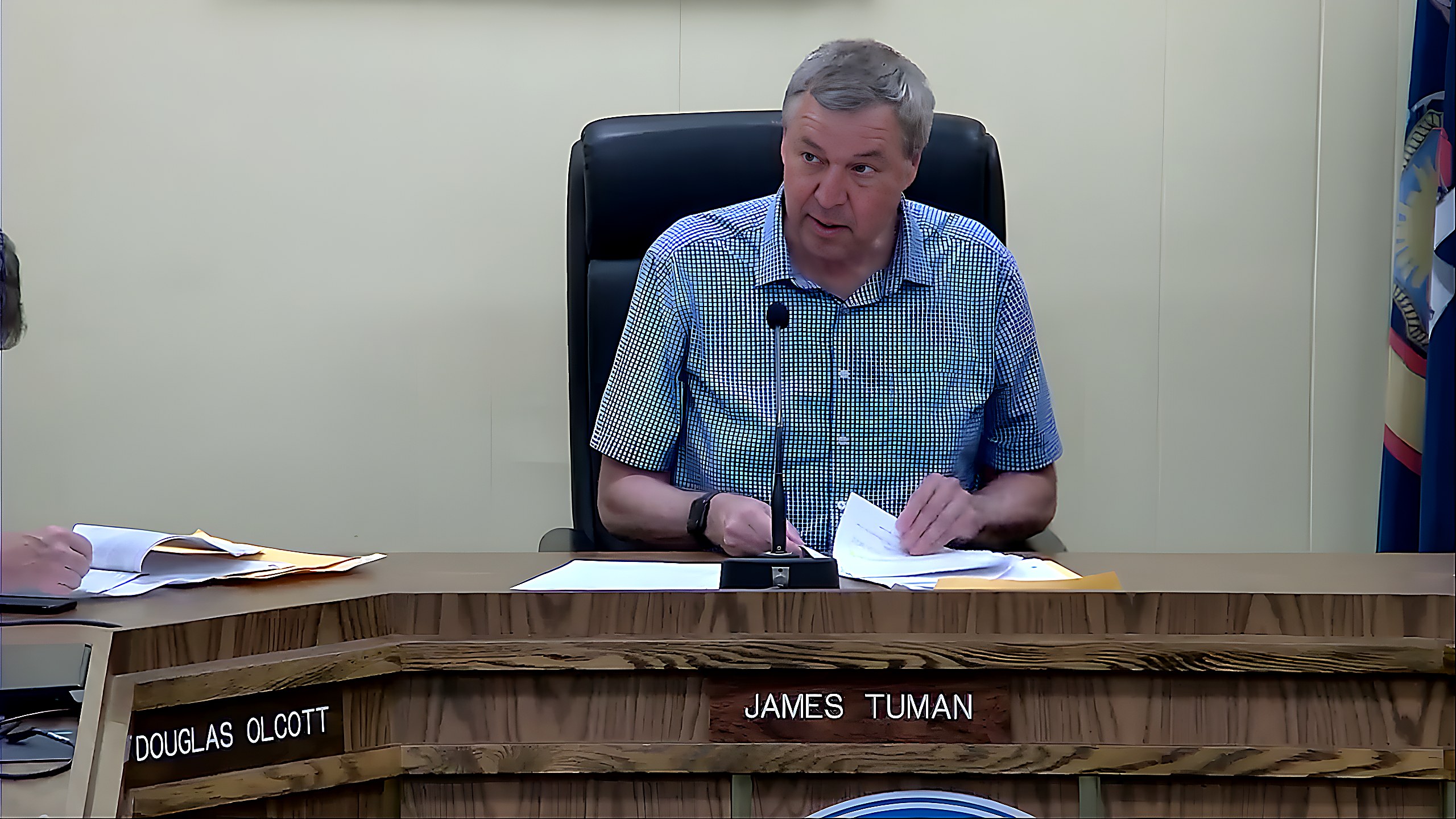
Chairman James Tuman explained that the ZBA was interpreting the code for the whole Village rather than deciding the keeper’s individual enforcement situation. The official minutes, still labeled DRAFT, record a unanimous interpretation of “fowl” as “a bird of any kind.” A separate 3–2 vote interpreted the awkwardly punctuated code to exempt fowl, as well as dogs and cats, from its 50-foot lot-line restriction. That general interpretation did not approve every aspect of a particular property.
An official reviews the animal-code language during the June 16 Zoning Board meeting. Watch this moment
The existing rule allowed up to 25 fowl. The dispute therefore involved both the meaning of the law already on the books and what a replacement law should permit in the future.
*The complete petition record*
Both petition statements form part of this record: the complete petition letter dated May 29 and the complete current statement of the Petition in Support of Responsible Pigeon Keeping in Croton. The second petition’s platform record dates its creation to August 21.
Disclosure: Croton News’ publisher helped create the petition supporting responsible pigeon keeping.
*Health concerns and competing experiences*
The Village’s research did not present pigeon-related disease as an inevitable result of keeping birds. Healy’s June 20 husbandry memo cited New York City health guidance on rare disease risk. At the June 24 work session, he also described outreach to Cornell Cooperative Extension and a conversation with county health staff. His account of the county conversation was qualified to the employee’s knowledge, rather than a flock-specific investigation.
The New York City Health Department identifies diseases associated with pigeon droppings but says, “The risk of pigeon-related diseases is rare.” It explains that exposure can occur when contaminated dust is inhaled during cleanup, with people whose immune systems are weakened at greatest risk. Routine cleanup does not pose a serious health risk for most people; large accumulations call for additional precautions.
The neighborhood testimony was divided on everyday impacts as well. At the September 2 hearing, Allison Rosen described birds gathering on roofs and gutters, droppings, early-morning noise and interference with outdoor use. She urged a ban without grandfathering.
Mark and Nicole Shapiro offered a different account in a September 1 letter. They described visiting with permission and observing a clean, well-maintained coop without offensive odor or visible rats. They urged enforceable rules for actual problems instead of a blanket prohibition.
The keeper acknowledged at the hearing that his birds had flown around other people’s houses. He explained that young birds initially do so while becoming accustomed to the area. His account of training helps explain why the latest proposal’s flight restriction is important, while the neighbors’ accounts explain why confinement and off-property effects remain disputed.
*Len Simon’s role — and his recusal*
By July, drafts proposed prohibiting pigeons, geese and swans from January 1, 2027 without the grandfathering procedure now offered. At the July 1 discussion, Simon pressed against grandfathering; Village counsel discussed time for owners to rehome or relocate birds. Read transcript / Play recording
Referral reviews addressed their own narrower questions. The Waterfront Advisory Committee’s July 10 memo recommended that the Village Board find the proposal consistent with the Village’s waterfront policies; that recommendation was distinct from a final Village Board consistency determination. The county planning response treated the matter as a local determination. The Planning Board also warned that the earlier chicken-coop setbacks could leave some small lots with room for an accessory dwelling but no compliant coop.
On September 2, Simon announced that he would recuse himself from further involvement in the proposal. His decision came after he had participated in the May debate and pressed against grandfathering in July. He disclosed a nearby personal connection to the dispute, said he remained objective and wanted to remove a distraction as the board continued its work. Read transcript / Play recording
“We will not be voting on this law tonight,” Pugh told the hearing. The Village’s project page records that action was deferred for further discussion. No grandfathering permission was granted that night either. Read transcript / Play recording
*What the new draft would allow — and prevent*
The October text would prohibit keeping “fully flighted birds,” including pigeons, geese and swans, outside residential dwellings in residence districts beginning January 1, 2027. The definition covers birds capable of active, powered flight and expressly excludes chickens and ducks. The draft separately protects keeping domestic animals as pets inside a dwelling.
An owner or possessor with birds when the law is enacted could request grandfathering from the ZBA. A publicly noticed hearing and written decision would weigh the “relative harm, fairness, and hardships to the applicant and any party appearing in opposition.” The ZBA could approve, deny or impose conditions case by case. Applying would not guarantee permission.
Even an approval could not permit an increase in the existing number of birds or “flight-based exercise or training from the place of confinement.” An enclosure would have to meet accessory-building setbacks. The proposal therefore offers a possible route to retain an existing flock while eliminating the outdoor training flights the keeper described.
*What ending the training flights could mean for the birds*
In its care guide, the National Birmingham Roller Club describes once-daily flights as usual practice for flying rollers, with exceptions for illness, predators or extreme temperatures. The guide describes trained, well-fed rollers flying for 30 to 60 minutes.
The Australian government’s 2022 welfare guidelines recommend daily flight opportunities for racing pigeons, including planned free-flight exercise of at least 30 minutes a day during pre-training and the racing season. The same guidance calls for birds to be confined outside planned periods and discourages persistent roof sitting.
In RSPCA Australia’s housing guidance, registered avian specialist Prof Bob Doneley warns that an enclosure arranged so birds have no need to fly can contribute to obesity and inadequate physical fitness. His advice treats usable exercise space as part of good housing, alongside shelter, cleanliness and protection from pests.
For birds kept without outdoor releases, exercise space remains important. The RSPCA’s bird-care guidance recommends daily flight in a large aviary or safe indoor space.
Croton’s draft sets accessory-building setbacks for grandfathered enclosures but does not specify a minimum flight-area size. Owners seeking permission to keep an existing flock would face a firm ban on outdoor training flights without a comparable exercise requirement in the grandfathering language.
January 1 is the proposed start of the outdoor-bird prohibition, not the effective date of every provision. The draft’s general effective-date clause is filing with the Secretary of State. Trustees are still considering the language. Wednesday’s work session is the next chance to examine whether a conditional right to keep the birds, without their established training flights, resolves the conflict that has occupied the Village since spring.
*What can you do?*
Read the current proposal and follow the October 28 work session, Wednesday at 7 p.m. in the Georgianna Grant Meeting Room. The agenda lists discussion, not an adoption vote. Under the Village’s work-session rules, public comment is at the presiding officer’s discretion.
You can contact the Board of Trustees with your own views on the proposed restrictions, grandfathering and the birds’ welfare.
To hear about future meeting dates, changes to the proposal and opportunities to respond, sign up for Croton News’ pigeon-issue action updates. The list is just for this issue, requires email confirmation and lets you unsubscribe at any time.
*Further reading*
Read the upcoming-meeting preview for what trustees will discuss October28 and how to respond.
Read the legal analysis for the drafting problems and questions trustees should resolve.
Documents and meetings behind this story
Every one of these is a
public record. Links go to original public records or our meeting pages.
●Two tenants seek compensation for fire losses, displacement, lost work and rent claims.
●Agency records and management correspondence trace warnings and the repair period.
●October 19 order grants renewed alternate service on UNPPG; proof is due within 20 days of the order, and completion and response timing depend on that filing.
Croton’s waterfront-review law took effect October 14
●Establishes the Assistant Village Manager position in Village Code § 31-2.
●Allows the village manager to appoint the assistant and assign duties.
●Requires the assistant to act during the manager’s absence, disability or a vacancy; trustees designate a qualified full-time Village employee if there is no assistant.
●Filed and effective September 25, 2026.
Croton's rent-relief income limit rises to $75,000 as two local laws take effect
●Local Law 10 of 2026 amends Chapter 204, Taxation, raising the combined household income limit for the rent-regulated tax abatement under state Real Property Tax Law 467-b from $50,000 to $75,000.
●Local Law 11 of 2026 amends Chapter 197, Streets and Sidewalks, rewriting the list of sidewalks exempt from the duty to clear snow and ice: two stretches of Farrington Road added, Radnor Avenue dropped, the Old Post Road South stretch redescribed and shortened.
●Both were adopted 5-0 on September 2, filed September 8, and took effect on filing under Municipal Home Rule Law Section 27.
●Neither change has yet been folded into the chapter text published at croton.news/villagecode, which still shows the pre-amendment version.
●Still proposals, not law: Introductory Nos. 7, 10, 13, 14 and 15 of 2026.
Experimental project: croton.news uses AI to generate articles from public records. Content may contain errors. Please report any inaccuracies and check our corrections log.AI-assisted experimental site — may contain errors. Corrections
Community Discussion
Be the first to comment on this story.
Sent to the editor for review
This is what you asked us to forward to the Village Board:
An editor reads it first. Once it goes, your comment here will show a ✓ Forwarded to the Village Board mark — that is your confirmation.