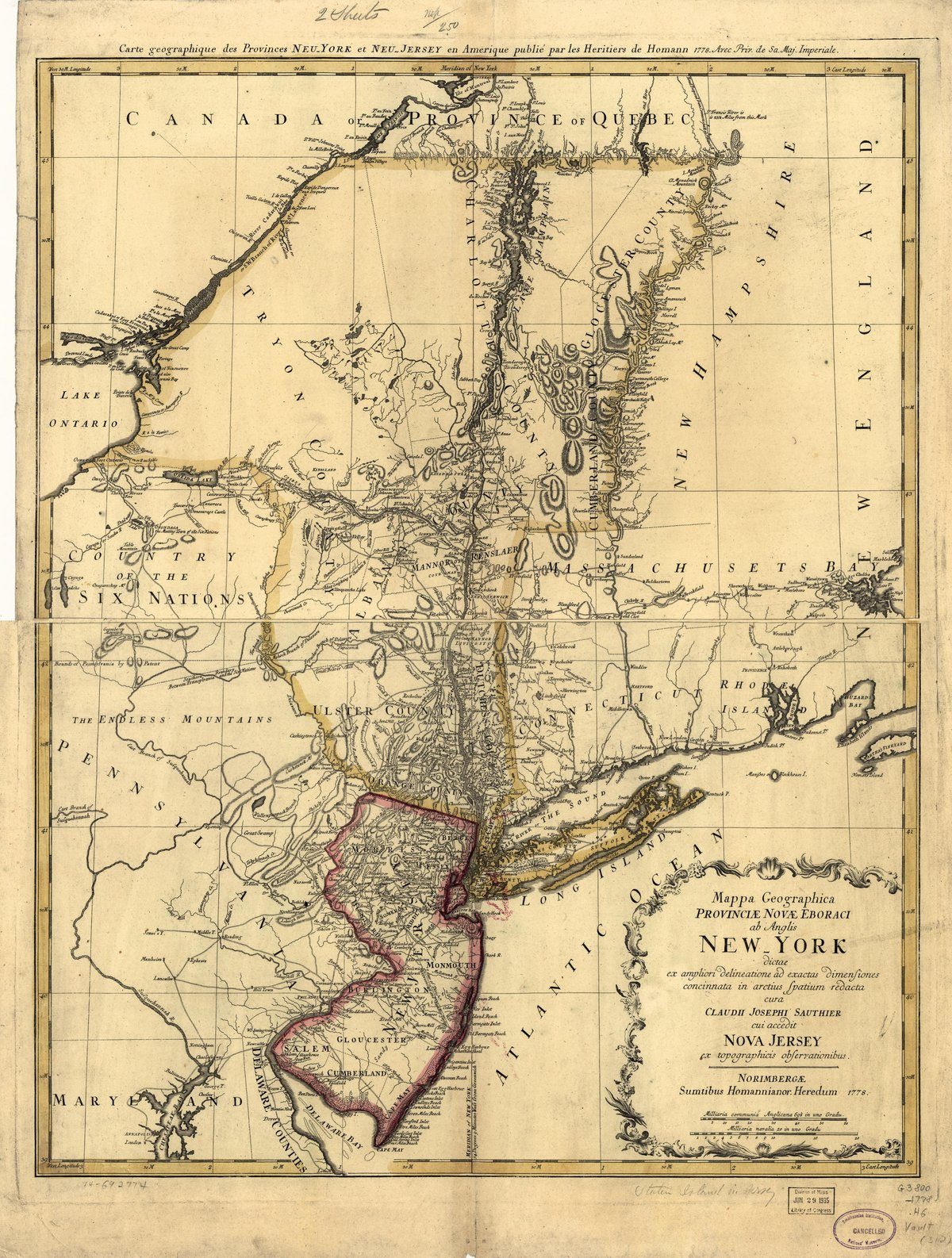
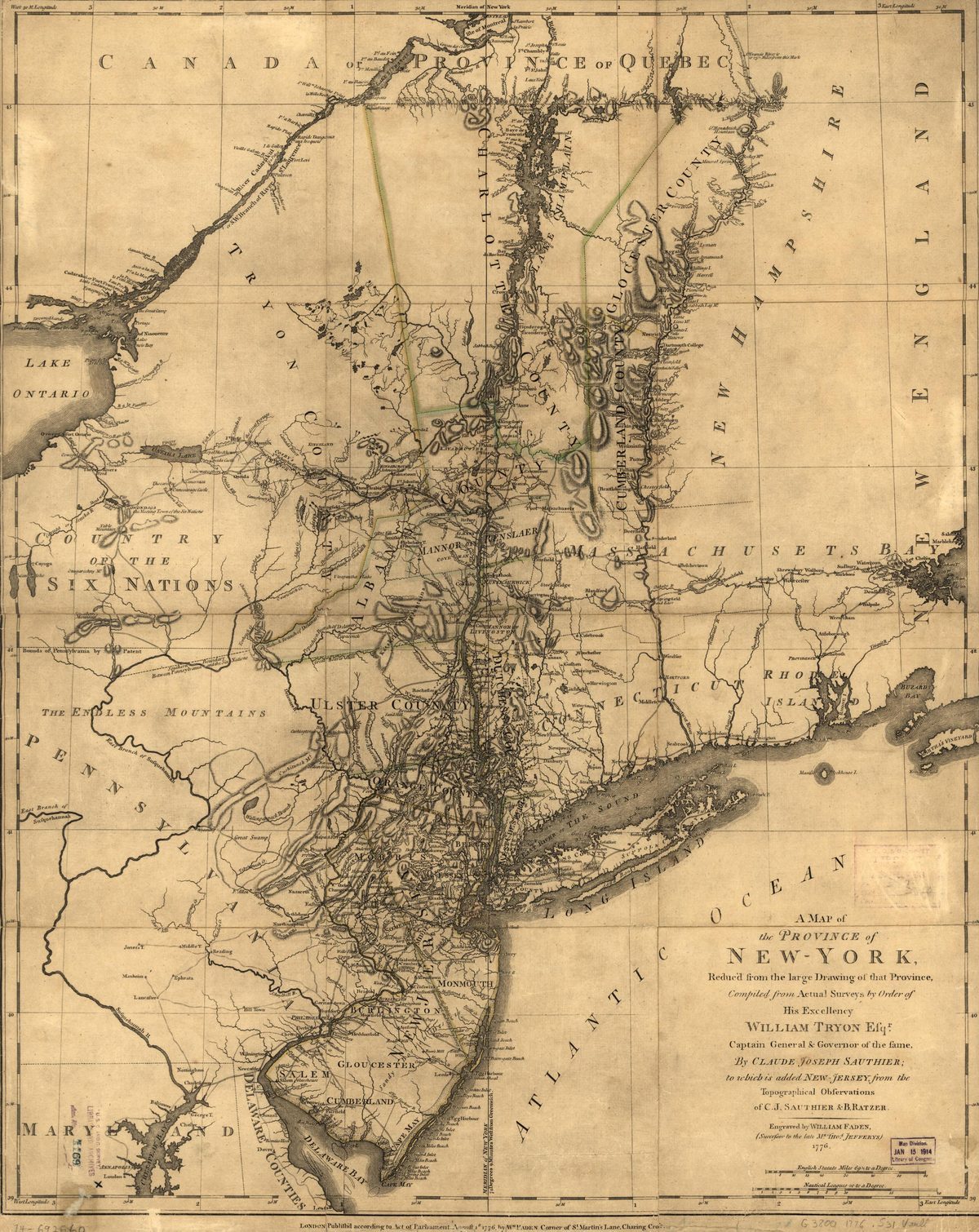
Claude Joseph Sauthier’s 1778 map of the Province of New York. A regional map, not a reconstruction of this incident.
In this story · 4 sections
In Jeremiah Anderson's recollection, Lieutenant William Mosier was being shaved when the alarm came. He took his gun and led his men down a lane toward Blind Brook. It is an arresting beginning to a small Revolutionary engagement—and a story recorded decades after the fighting. [1]
From a house to an open field
Anderson identified Henry Dusenbury's house and described a lane, a crossing and a field where Mosier's men formed a square or circle. The alternatives in his wording matter. They show the limits of the recollection as well as the detail it preserves. [2]
Samuel Oakley placed the company at breakfast when Kipp overtook it. His account includes uncertainty about the house and a different emphasis on the encounter. Both accounts connect the alarm with movement into a defensible formation. They should be compared rather than forced into a minute-by-minute script. [3]
Cavalry against a close formation
Anderson described repeated attempts by mounted men to break Mosier's group. He also relayed a discussion among the opposing officers, but identified a chain of transmission: Major Hungerford told him what Captain Kipp had said. That is several steps from a verbatim record of a command conference. [2]
James Hopkins supplied another remembered explanation for the cavalry's withdrawal, attributed to Steven Hunt. The report includes concern about casualties and the determination of Mosier's men. It is useful as a recollection of how participants explained the engagement, with the speaker and intermediary kept in view. [4]
The cost remembered by a family
David Higgins connected the fight with an injury to John Chatterton, whom he identified as his uncle. This shifts the scale from tactics to a family consequence. His statement supplies a name and a remembered wound; it does not by itself establish a complete casualty list. [5]
Such details are valuable precisely because they come from different parts of the community. A military account may summarize a successful defense. A relative remembers the person who came away injured.
Mapping a recollection
The house, lane, brook and field provide leads for historical mapping. A distance recalled in the 1840s cannot simply be plotted on a modern map as an exact battlefield coordinate. Roads changed, properties divided and familiar landmarks disappeared. Period maps and land records are needed to test the reconstruction.
The same restraint applies to spoken orders. McDonald's interviews preserve remembered speech; quotation marks in the manuscript do not turn it into a recording made during the battle.
The episode is compelling at this scale: a small company, a hurried response and later memories of holding together under pressure. Readers can follow the citations to compare what each person said, including the hesitations that a polished retelling is tempted to remove.
Updated October 16, 2026. Rewritten around named recollections and their chains of transmission. Removed unsupported claims that every tactical detail and remembered conversation was previously unpublished or independently corroborated.
Citations
- Interview with Anderson, Jeremiah
- Interview with Anderson, Jeremiah
- Interview with Oakley, Samuel
- Interview with Hopkins, James
- Interview with Higgins, David
Numbered citations link to the cited passage in the archive.
Follow the evidence
Sources are linked beside the claims they support. Numbered notes open archived passages; named links open the cited record or publication.