*During the Revolution, women in the Croton Valley organized a mounted raid on a grocer's tea stocks — an act of collective defiance in one of the war's most dangerous landscapes*
April 2026 update. The original 2025 draft of this article relied on secondary sources in the Diamant / Croton Friends of History tradition. In April 2026 we OCR'd the five primary-source McDonald Interviews that mention the raid directly from the WCHS manuscript page images — the first time the handwritten depositions have been machine-read. The primary sources contradict the standard retelling on leadership, target, number, method, and location. For a forensic reading of all five manuscripts and a full citation audit, see [The Tea Captain Was Not Elizabeth](/story/21_tea_captain). The article below is preserved for reference but has been superseded on the key factual points.
The story of the Westchester Tea Party comes down to us through John MacLean McDonald (1790–1863), a Congregationalist minister who between 1844 and 1851 conducted more than 400 interviews with survivors and descendants of the Revolution across Westchester and Putnam counties. McDonald wrote up the raid as a set piece in the manuscript that now lives in the New-York Historical Society as “The McDonald Papers” — a Chapter I account of the “female insurrection” that reached the Hudson in the summer of 1776. Lincoln Diamant revisited the story in the 1970s through McDonald's unpublished text. But because the full manuscript was only digitized recently, most retellings since Diamant have worked through paraphrase. The passages below are taken from the primary McDonald text itself.
The Neutral Ground
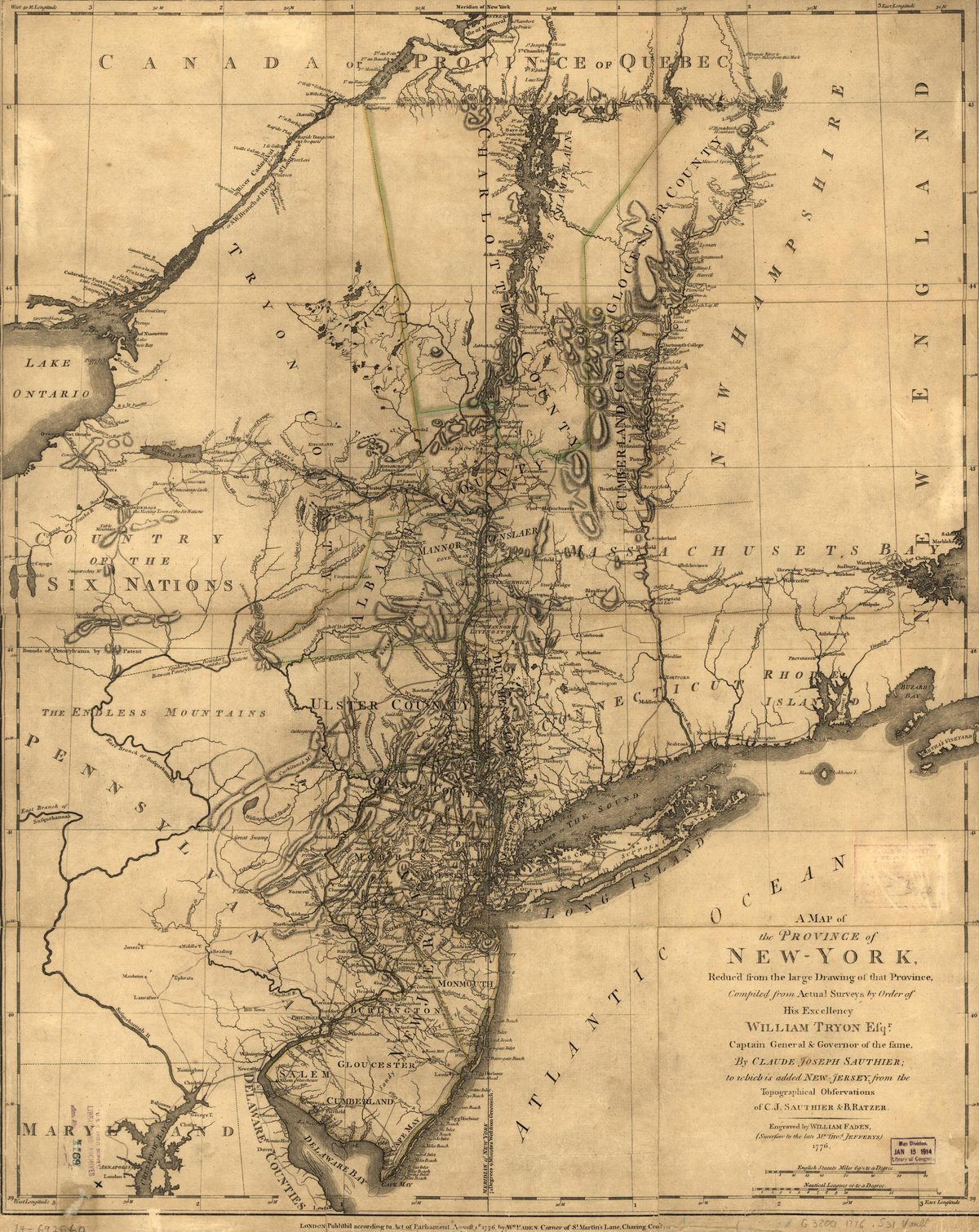
To understand what the women of the Croton Valley faced, you must first understand the place they lived. During the Revolution, Westchester County became what contemporaries called the Neutral Ground — a no-man's-land between the American lines above the Croton River and the British-held territory below. It was neutral in name only.
Frederic Shonnard, in his 1900 *History of Westchester County*, described the reality: “Practically all of Westchester County was continually exposed to alternate American and British raids, forages, and ravages, to depredations by bands of irresponsible ruffians not regularly attached to either army, and to acts of neighborhood aggression and reprisal by the patriot upon the Tory inhabitants and vice versa” [1] (Shonnard 1900 [1]).
Two classes of irregular fighters terrorized the civilian population. Shonnard names them with grim precision: “In addition to the regular troopers on either side, there were numerous unauthorized and wholly illegal bands, organized principally for private plunder, called Skinners on the American side and Cowboys on the British” [2] (Shonnard 1900). Washington Irving, who grew up in the Hudson Valley and wove these memories into *The Legend of Sleepy Hollow*, captured their methods through Shonnard's description: “This debatable land was overrun by predatory bands from either side; sacking henroosts, plundering farmhouses, and driving off cattle. Hence arose those two great orders of border chivalry, the Skinners and Cowboys. Neither of them stopped to ask the politics of horse or cow which they drove into their lines” [3] (Shonnard 1900).
Robert Bolton, writing in 1848 from testimony closer to the events, recorded a petition from Westchester civilians that conveys the desperation: “Unhappy am I to add that amidst all our sufferings the army employed for the protection of America have not refrained from embittering the calamities of war, at a time when the utmost resources of this state were laid open to their wants” [4] (Bolton 1848). Even the American army, supposedly there to protect its own citizens, was stripping the countryside of food.
This was the world in which approximately thirty women organized a mounted raid on a grocer's tea supply.
The Raid
McDonald set the scene plainly: *“During the summer of '76, however, tea became scarce in the interior of the country, and those who possessed a stock of the article, held it fast, in the expectation of a great rise in its value. This led to female insurrection in several of the counties that bordered upon the Hudson River. Storehouses containing the covered Bohea, at the time almost the only kind of tea in general use, were besieged by thirsty housewives, sometimes for several days in succession, and for the most part successfully.”* The summer of 1776. The article in demand was Bohea. The method was siege.
The first target had been up the river — Colonel Brinkerhoff's stock — and after the “Amazons” withdrew he sold the lot to New York speculators and had it *“precipitately forwarded,”* McDonald wrote, *“as the patriots termed it, to the North River, where it was put afloat and conveyed to Albany.” [5]* The next target was a grocer named John Arthur, operating in the southern part of Cortlandtown. Arthur had hidden his stock, but *“by some means it became whispered about, that such was the case,”* and the news traveled “from farm house to farm house” [5] until it reached the households along the Hudson.
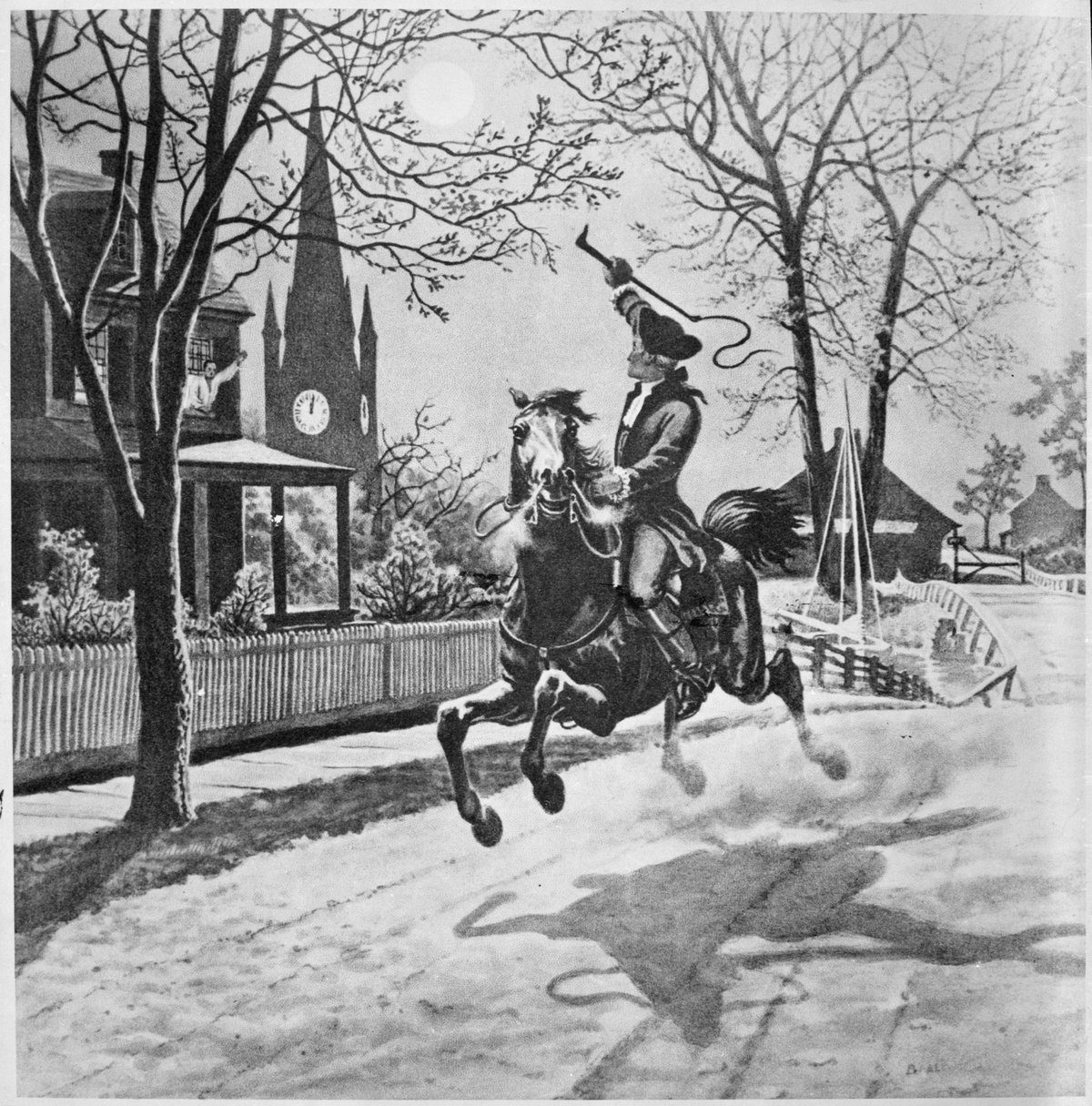
On an autumnal morning, McDonald records, *“upward of thirty females assembled, from the precincts of Sing-Sing, Tarrytown, Sleepy-Hollow, and Weekersqueeke, all mounted on horseback, and eager for the enterprise.” [6]* Their captain was chosen by acclamation. McDonald calls her simply *“Jonas Orser's better half, a woman of undaunted resolution who ruled her own household and influenced her neighborhood.” [6]* She formed up her company and moved on Arthur's Hamlet.
Arthur was forewarned. *“A wary man, seldom off his guard,” [7]* McDonald wrote, *“before he gave the tea hunters a direct answer, [he] had the address to draw from them [the] object of their visit. He then accompanied them a short distance, and after having carefully indicated to them, the most circuitous of all the routes that led to his domicile, he himself took the shortest direction back, in order to put his castle in a posture of defense.”* The sleight of hand bought him time. He barricaded the doors and windows before the riders arrived.
When Madam Orser's company reached the house and *“having been refused admittance, and set at defiance,” [8]* McDonald's text turns formal, almost mock-military. They *“proposed a parley; whereupon an upper window was opened. A demand for a box of tea, with promise of future compensation, was rejected. A similar requisition, upon payment of a just and proper sum, was also refused, but the commander of the post held out to the besiegers the promise, that when the master returned home, he should positively sell them what tea they wanted, provided they would now peaceably withdraw from the premises.”*
The women held a council of war. McDonald writes that *“the result of their deliberation was, that the garrison would probably make a desperate defense, that although the courage of the besiegers remained unshaken, and their ability to capture the place by a storm, was undoubted; yet that they were unwilling at present, to resort to bloody extremities, and concluded therefore, to accept the proposition made by Dame Arthur.”* They withdrew without forcing the door. Arthur, true to the terms, supplied them later with the promised tea, and — in one of McDonald's gentler endings — it *delighted* them through the winter.
The Orser family was prominent enough in the area to appear in later published histories: Shonnard's index records “the surprise at Orser's (January, 1782)” as a distinct military engagement, and Bolton noted Orser properties in the Croton area. These were not people on the margins. They were established landholders whose property was significant enough to be a military target a few years later.
The Tea
Bohea was the most common grade of black tea consumed in colonial America — the everyday tea of the working population, imported in vast quantities before the war disrupted trade. It was the same variety dumped into Boston Harbor in 1773. That the Westchester women demanded and received Bohea specifically — not the finer hyson or gunpowder teas that wealthier colonists preferred — suggests their action was driven by practical need rather than political theater. In a landscape where Skinners and Cowboys were stealing livestock and both armies were requisitioning food, a winter's supply of tea was not a luxury but a small island of normalcy.
The Name
Diamant's investigation into the Teatown place-name began with a British Museum librarian's response to a 1931 query from the New-York Historical Society: he had “made a search of the various gazetteers, old and new, and have failed to discover any place in Britain bearing this name”. The English-village theory was dead. The connection to the Westchester Tea Party remains the most widely cited alternative explanation, though Diamant himself presented it as one possibility among several.
What We Can Verify
The Teatown story must be treated honestly for what it is: oral tradition, transmitted through at least two generations before Macdonald wrote it down, and reaching us through Diamant's twentieth-century research. We cannot confirm the number of women, the exact date, or the specific dialogue. We cannot rule out embellishment over the decades of retelling.
But several elements of the story are corroborated by independent sources. The Orser family's presence in the area is confirmed by both Bolton (1848) and Shonnard (1900). The wartime conditions — the plundering, the shortages, the lawlessness of the Neutral Ground — are exhaustively documented. The military significance of the Orser property is established by the “surprise at Orser's” in January 1782, recorded in Shonnard's index as a distinct engagement. And Macdonald's interview method — over 400 conversations with 241 descendants, conducted within living memory of the Revolution — represents a systematic effort to capture community knowledge before it was lost.
What the story preserves, even if its details have been shaped by retelling, is the texture of Revolutionary-era life in the Croton Valley: the resourcefulness of women managing communities while men were at war or in hiding, the practical politics of food supply in an occupied region, and the willingness of ordinary people to organize collective action in the face of deprivation. In a landscape terrorized by Cowboys and Skinners, where even the Continental Army stripped the countryside bare, thirty women on horseback riding to a grocer's door was not a quaint legend but an act of survival.
For a forensic reading of all five direct McDonald witnesses (Talman Orser, Chadeayne, Kipp, Ryder, Washburn) and a full reconciliation of the “Sarah” vs “Elizabeth” Orser identification, see [The Tea Captain Was Not Elizabeth](/story/21_tea_captain).
Citations
- History of Westchester County, New York, from its Earliest Settlement to the Year 1900
- A History of the County of Westchester, Vol. I
- The History of the Several Towns, Manors, and Patents of the County of Westchester, Vol. II (1881 revised ed.)
- The McDonald Papers, Part I, Chapter 1: Before the Battle of White Plains
Numbered citations link to the primary-source passage in the archive.
Sources Consulted
- **McDonald, John M.** *The McDonald Papers* (manuscript, New-York Historical Society, 1844–1851), Part I, Chapter I — the primary text for the "female insurrection" narrative, including the Brinkerhoff raid, Arthur's defense of his "castle," Madam Orser as captain, and the thirty riders from Sing-Sing, Tarrytown, Sleepy-Hollow, and Weekersqueeke. All inline quotations in this article are taken from this source.
- Shonnard, Frederic & W.W. Spooner. *History of Westchester County* (1900) — Neutral Ground conditions, Cowboys and Skinners, and the "surprise at Orser's" January 1782 engagement in the index.
- Bolton, Robert Jr. *A History of the County of Westchester* (1848) — wartime deprivation petition and Orser family properties in Cortlandtown.
- Diamant, Lincoln. *Chaining the Hudson: The Fight for the River in the American Revolution* and related 1970s-era research notes that reintroduced the McDonald account to modern readers.
- "In Search of Teatown," Croton Friends of History — summary and commentary.
All direct quotes are verbatim from the cited sources. Each factual claim was verified against the Croton Historical Archive database.