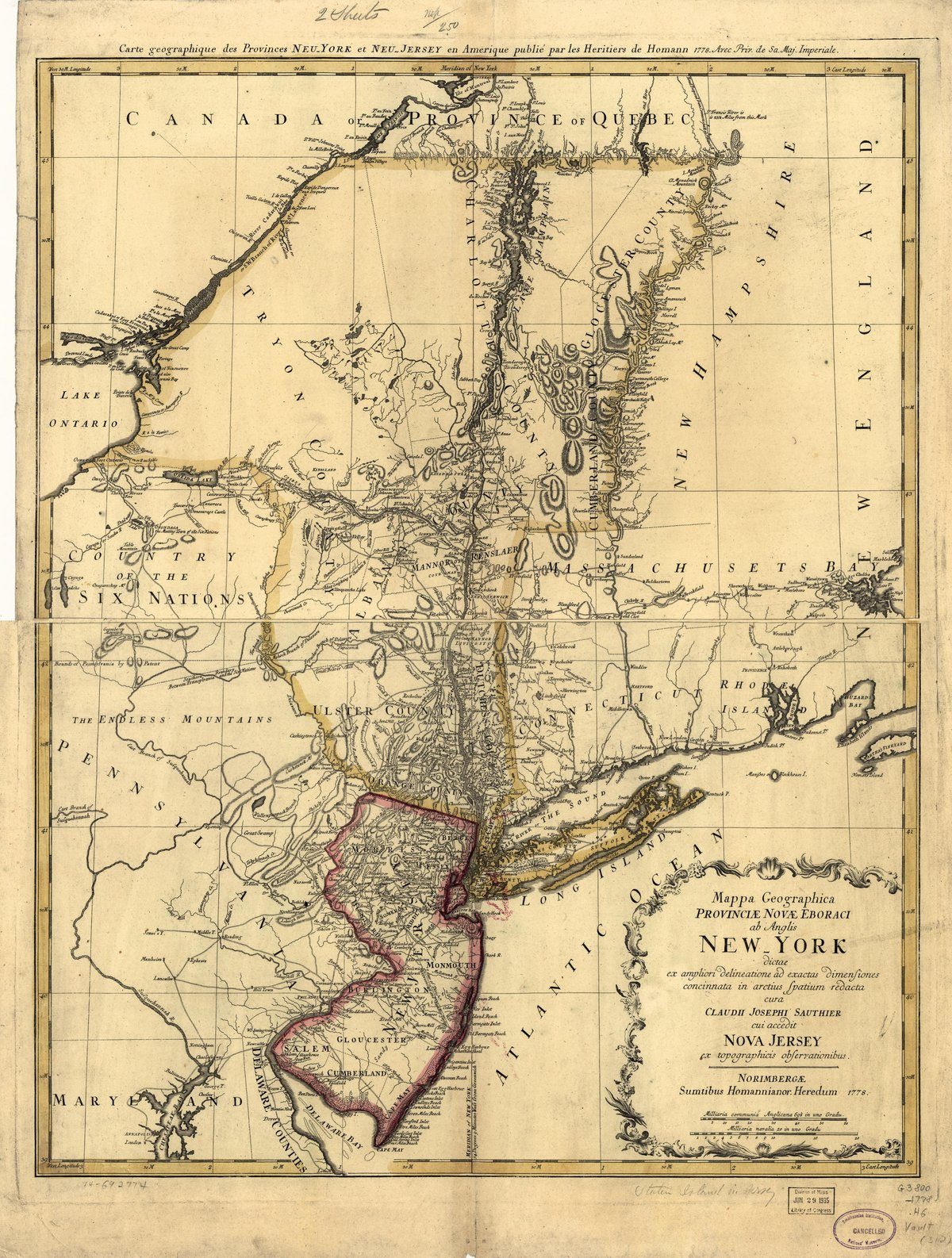
Claude Joseph Sauthier’s 1778 map of the Province of New York. A regional map, not a reconstruction of this incident.
In this story · 4 sections
Mansfield Bearmore appears in the McDonald interviews as a raider, a protector, a prisoner and a wounded officer. The descriptions differ with the speaker's relationship to him. That makes the collection useful for a portrait, but a poor basis for declaring one witness's judgment the definitive character of the man.
Protection for some, severity for others
Elizabeth Field Carpenter recalled Bearmore reassuring her father when the family feared its house would burn. Elsewhere in the same interview, she described him as protective toward people he knew and hostile toward committed Whigs. These are related observations: personal acquaintance could matter within a violent political conflict. [1] [2]
Talman Orser remembered cattle and furniture taken by raiders and associated Bearmore with their command. He also told a story of Armand securing Bearmore on his own horse after capturing him. The interview records Orser's account; it does not independently establish every detail of the capture. [3]
A wounded commander in Hobby's account
Enos Hobby described marching under Bearmore toward the Croton, turning back after learning of American reinforcements, and encountering a scout near Twitching's. His narrative places the confrontation in darkness and describes an unsuccessful mounted charge against difficult ground. He recalled Bearmore being wounded while urging the men forward. [4]
In the continuation, Hobby said Bearmore died weeks later. His account also moves from the commander's injury to the exhausted men's retreat, including arrangements for mounted men to help foot soldiers. Those practical details give the recollection texture while remaining late testimony. [5]
Hobby's uncertainty about the date is part of the source. The narrative should not become a precise calendar merely because a modern headline needs one.
A revealing editorial note
One often-cited favorable description requires particular care. Samuel Washburn's interview calls “Burr” a good and vigilant officer. An editorial note proposes that the writer probably meant Bearmore. The proposed identification may be worth investigating, but it is not the same as Washburn unambiguously naming Bearmore. [6]
This small example shows why the archive's notes and corrections deserve as much attention as its dramatic passages. Removing the note would make the evidence seem stronger than it is.
A portrait assembled from relationships
The interviews preserve a man encountered differently by neighbors, opponents and people who marched with him. They also preserve how those encounters were remembered decades later. A balanced portrait keeps both levels visible.
Our earlier claim that Bearmore was the most-mentioned person in the entire collection rested on an incomplete transcription set. It has been removed. His historical interest does not depend on winning a frequency contest. It lies in the range of testimony and in what that range reveals about war among people who often knew one another.
Updated October 16, 2026. Rewritten to distinguish the interviewees’ perspectives, preserve an editorial uncertainty over “Burr,” and remove obsolete corpus rankings and unsupported claims of novel discovery.
Citations
- Interview with Carpenter, Elizabeth Field
- Interview with Carpenter, Elizabeth Field
- Interview with Orser, Talman
- Interview with Hobby, Enos
- Interview with Hobby, Enos
- Interview with Washburn, Samuel
Numbered citations link to the cited passage in the archive.
Follow the evidence
Sources are linked beside the claims they support. Numbered notes open archived passages; named links open the cited record or publication.